
The MICE Logistics Playbook for a Desert Component in Abu Dhabi

A MICE programme with a desert component looks simple on the page: transfer the group out, run the event, transfer them back. In practice it has more moving parts than an equivalent indoor conference day, and most of the failure points are logistical rather than creative. This is a working playbook for a DMC or PCO planning that component, covering permits, transfers, timing and weather, the things that determine whether the evening runs smoothly rather than how good the setting looks in the proposal deck.
Permits first, design second
Any commercial event on desert land in the UAE needs the right permits and a licensed operator behind it, covering the site, any structures being built, and often filming or drone use if the programme includes content capture. This is not a formality to leave until the week before. Permit lead times, particularly for filming or drone approval, commonly run three to four weeks, and site-specific approvals can take longer depending on the scale of the build. Ask your ground operator for their trade licence, public liability insurance and permit track record at the proposal stage, not after the contract is signed. Our guide to desert event permits in Abu Dhabi covers the paperwork in more detail.
Transfers are where large programmes actually fail
For any group above roughly eighty people, transfers are usually the highest-risk part of the day, not the event itself. A group travelling by coach to a site with a soft-sand final stretch needs a staging point where guests move into 4x4 vehicles, and that staging point is where poorly planned programmes fall apart: guests standing in a car park at dusk with nowhere to sit and nothing to do. Handled properly it is a briefed, timed rotation with shade and hospitality at the staging point, so the changeover reads as part of the experience rather than a delay before it.
Build the transfer schedule around vehicle capacity and realistic loading times, not the theoretical maximum. A coach that takes twelve minutes to unload calmly takes twenty-five when guests are moving luggage or gifts at the same time.
Timing against the season, not the clock
Desert programming runs on sunset, not on a fixed hour. A 6pm arrival that looks perfect on a January run sheet is a stumbling-around-in-the-dark arrival in the height of summer, when the sun sets far earlier. Build every desert element of a MICE programme against the season's actual sunset time, with the welcome sequence, coffee service and any golden-hour photography scheduled to land in the light. In the hot months, shift outdoor programming later into the evening entirely and lean on lighting and cooling for anything that has to happen after dark.
Weather contingency, agreed before the day
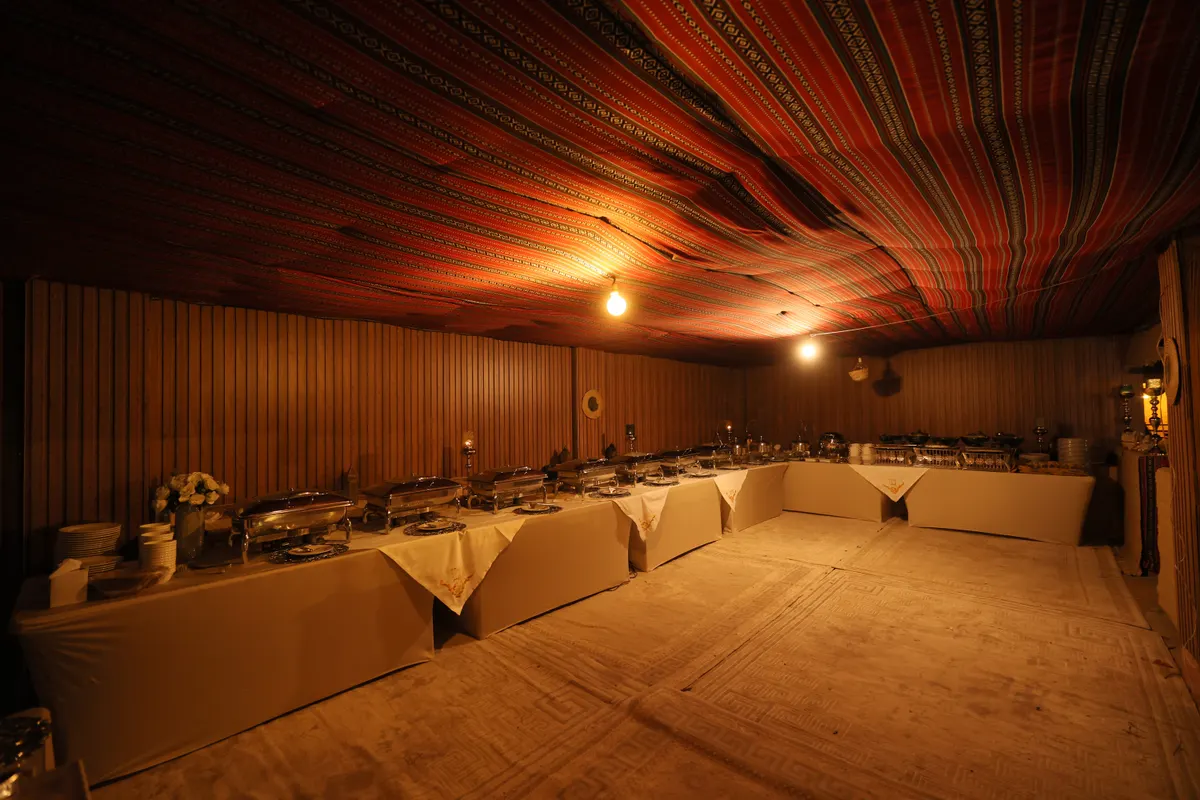
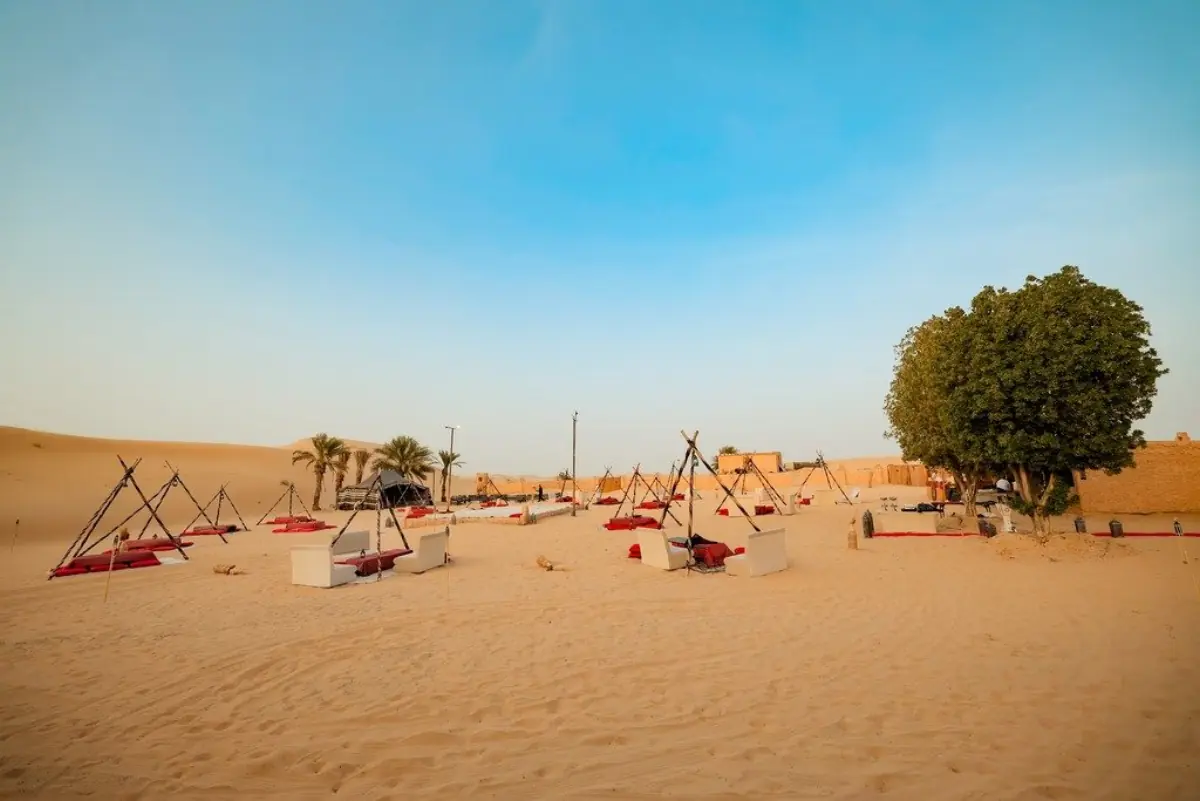
Two things need deciding at the planning stage, not discovered on site: a wind threshold that triggers a change of plan for anything tall or fabric-based, and a named decision-maker with authority to call it. Tented cover sized for the full guest count is standard practice for anything running October to April, when occasional wind and the small chance of rain are realistic possibilities. Ground checks two or three days out, rather than assuming the site is unaffected, catch problems while there is still time to adjust.
Working with a local partner
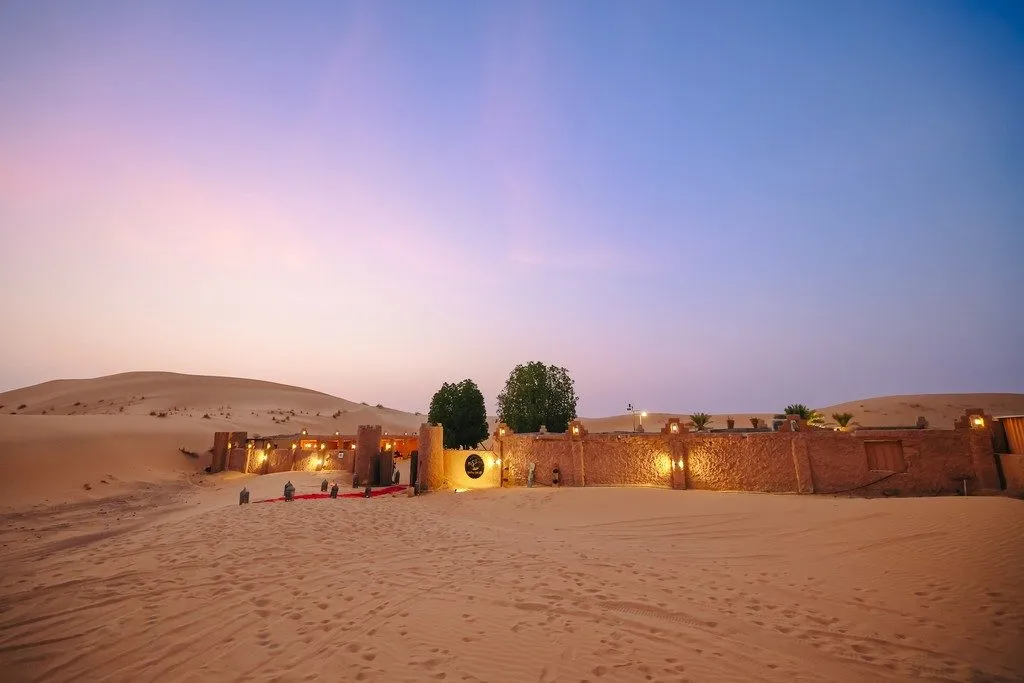
A DMC or PCO bringing an international group into Abu Dhabi is almost always better served contracting a local operator for the desert component than attempting to run it directly. A local partner already holds the permits, the site relationships, the vehicle fleet and the crew, in our case 40-plus in-house crew built around Al Khatim, and can absorb the operational risk that a visiting planner cannot realistically manage from another country. Ask what a prospective partner actually owns versus what they subcontract, how many events per year they run at your group's scale, and who the single point of contact is on the day itself. Our DMC partner programme is built around exactly this brief, and our incentive travel guide covers how the desert component fits a longer programme.
A working pre-event checklist
- Permits confirmed in writing, including filming or drone approval if relevant, with lead times built into the overall schedule.
- Transfer plan with vehicle counts, a staging point if needed, and a realistic loading buffer.
- Run sheet timed against the season's actual sunset, not a fixed clock hour.
- Wind threshold and named decision-maker agreed in advance, with a tented contingency for the full guest count.
- Single point of contact on the ground operator's side, confirmed for the day of the event.
- Insurance, trade licence and risk assessment documents on file before the contract is signed.
FAQs
How far ahead do permits need to be filed?
Three to four weeks for filming or drone approval, and site-specific event permits should be started as early as the venue and date are confirmed, since lead times vary with scale.
What group size needs a vehicle staging point?
Generally anything moving by coach that then transfers to 4x4 vehicles for a soft-sand final approach, which becomes a real logistical factor above roughly eighty guests.
What weather contingency is standard for a desert MICE event?
Tented cover sized for the full guest count, a ground check two to three days out, and an agreed wind threshold with a named decision-maker who can call a change of plan.
Should we contract a local operator or bring our own team?
For the desert component specifically, a local operator who already holds the permits, site access and vehicle fleet is almost always the safer and more efficient route than running it directly.
Related guides

Younus leads corporate and MICE delivery at Sparkling Sandset, including team-building programmes, incentive groups and DMC partnerships across Abu Dhabi and the wider UAE. He writes about the operational side of corporate events: venue selection, group logistics, facilitation and what changes when the guest list is a client's, not a family's.