
Incentive Travel in the UAE: Building a Programme That Earns Its Budget
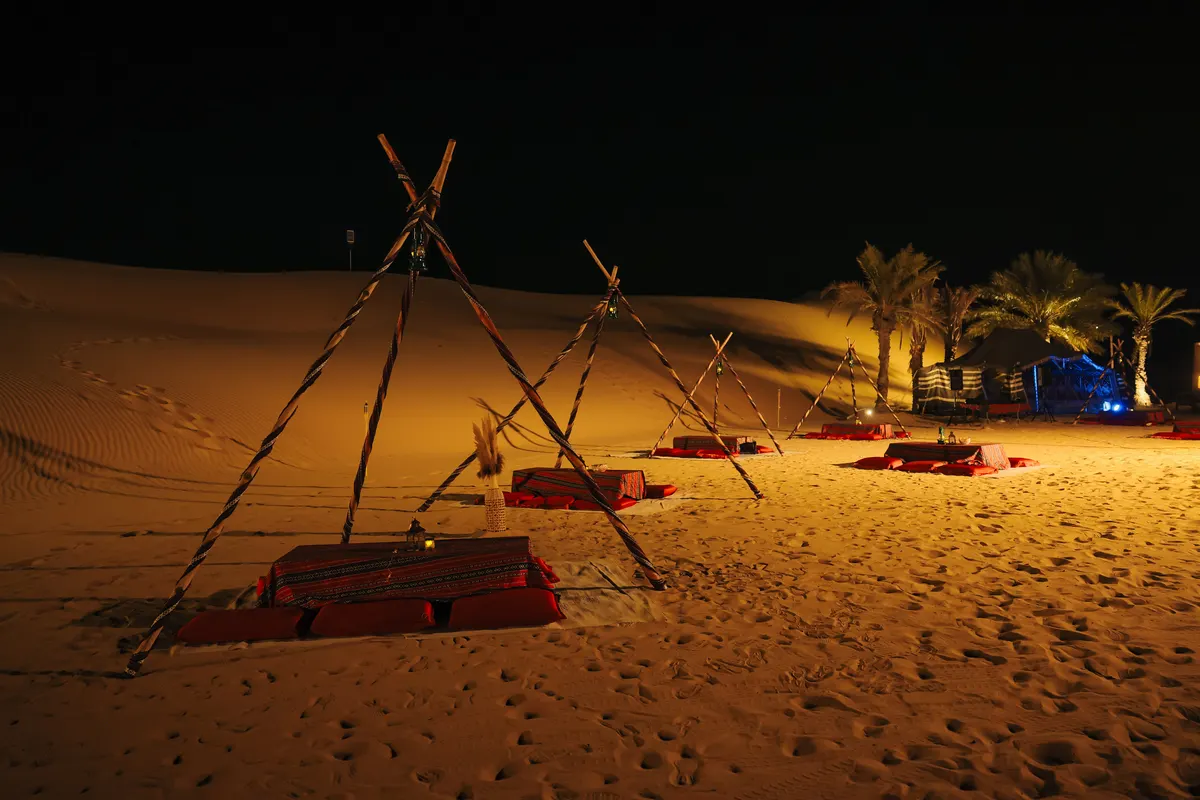
Incentive groups are a difficult audience in a specific way: they have usually stayed in good hotels and eaten in good restaurants already. Another nice dinner does not register. What registers is the thing they could not have arranged themselves.
Where the UAE is genuinely strong
Short-haul from Europe and India, excellent air links, hotel stock at every level, and, the differentiator, a landscape forty minutes from a five-star lobby that looks nothing like anywhere the group works.
That contrast is the asset. A programme that stays entirely in the city is competing with every other destination on hotel quality. A programme that uses the desert properly is not comparable to anything. It is also the reason Abu Dhabi keeps winning incentive business away from Dubai; see our comparison of Abu Dhabi and Dubai for corporate retreats for the fuller argument.
Structuring a three or four day programme
The shape that works most reliably:
- Day 1, arrival. Low demand. A welcome dinner somewhere with a view. Do not schedule anything requiring energy or attention.
- Day 2, content. Conference or working sessions in the morning, something active in the afternoon.
- Day 3, the centrepiece. The desert day. This is the one they will describe when they get home.
- Day 4, soft landing. Late checkout, optional culture or shopping, departures.
Put the desert day third, not first. On day one people are tired and haven't bonded; by day three they have, and the evening lands completely differently.
What makes a desert day work for an incentive group
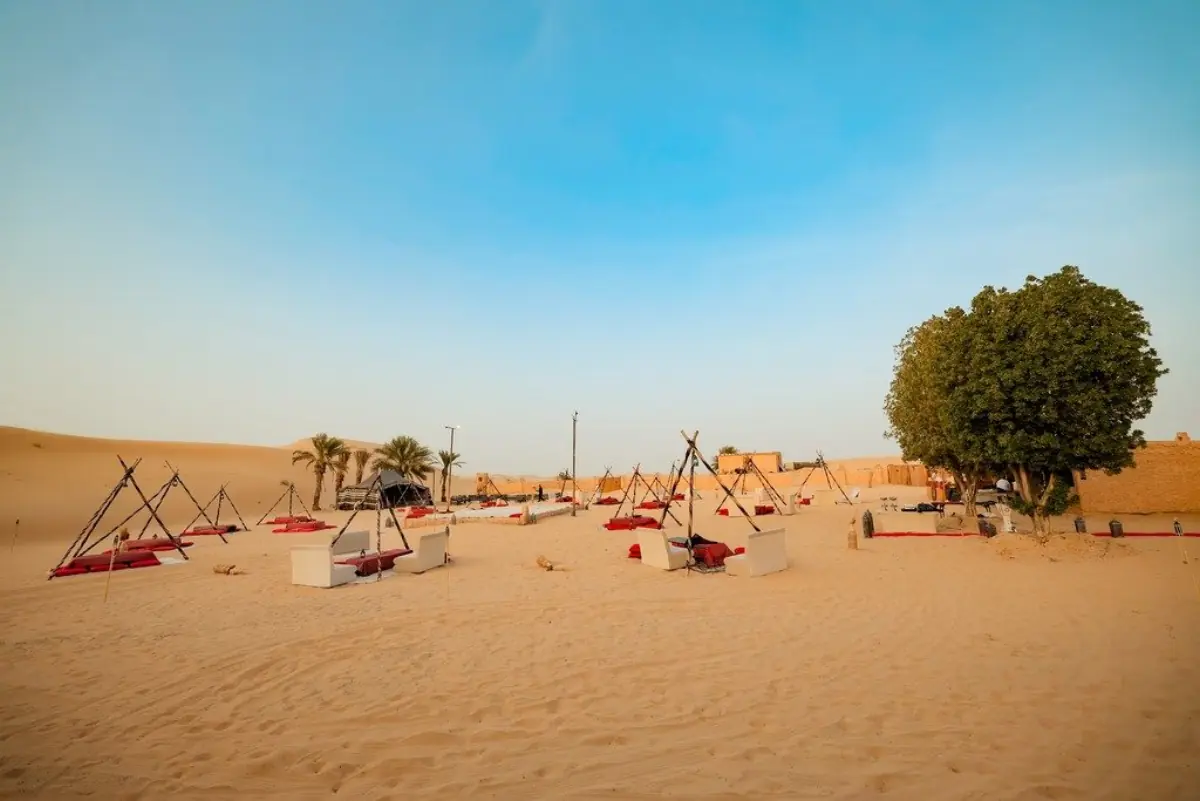
Arrival in convoy timed to reach camp before sunset. Arabic coffee and dates, sunset from a dune, cultural programming that is hospitality rather than a floor show, dinner around fire, and unstructured time. Overnight if the programme allows, because the sky after midnight is the thing people photograph and cannot reproduce.
What does not work: over-programming. The instinct is to fill every slot to prove value. The opposite is true, the conversations that make the trip are the ones that happen in the gaps.
Working with a DMC
Most incentive programmes come to us through a destination management company, and that works well. The DMC handles the whole itinerary and contracts suppliers like us for the elements we deliver, working to their client-facing brand rather than ours.
If you are building the itinerary around a specific arrival, our four-night incentive blueprint from Frankfurt to the dunes lays out a full European group's schedule end to end, and pairing a Yas Island incentive day with a desert night is one of the more reliable three or four day shapes we build.
If you are the end client comparing a DMC quote to a direct one: the DMC margin is real and it is buying coordination across accommodation, transfers, restaurants and multiple suppliers. For a single desert evening, direct is cheaper. For a four-day programme across two emirates, the coordination is worth paying for.
Seasonality and group size
October to April for anything outdoors. Peak incentive season is November to March, so book months rather than weeks ahead.
Groups of thirty to a thousand work. Above about 150, transfers become the dominant logistical risk and the staging point between coaches and 4x4s is the single thing most worth getting right.
FAQs
How far ahead should we plan?
Six months for peak season. Three at an absolute minimum for anything above a hundred people.
Can you work behind our branding?
Yes. For agency and DMC bookings we work entirely behind the client-facing brand.
What about dietary and cultural requirements?
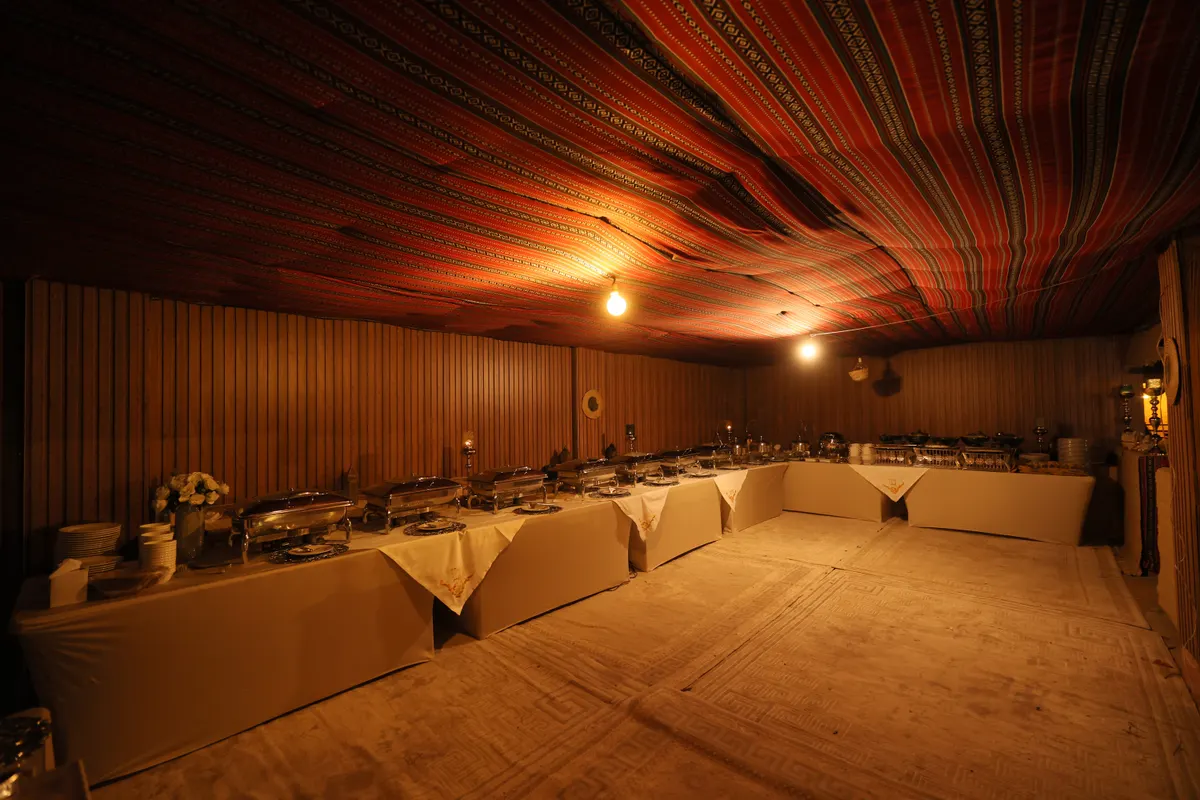
Tracked against the guest list rather than handled at the buffet. Halal compliance is standard.
Is one desert night enough?
For most programmes, yes, one done properly beats two done adequately. Multi-night works for groups where the desert is the whole point.
Related guides
Tabassum founded Sparkling Sandset in 2012 and has run the Al Khatim camp through more than 500 private weddings, celebrations and cultural events since. She writes about the celebration and hospitality side of the business: weddings, birthdays, cultural programming and what it actually takes to host a private desert night well.