
Private Desert Camp or Hotel for a Group Occasion
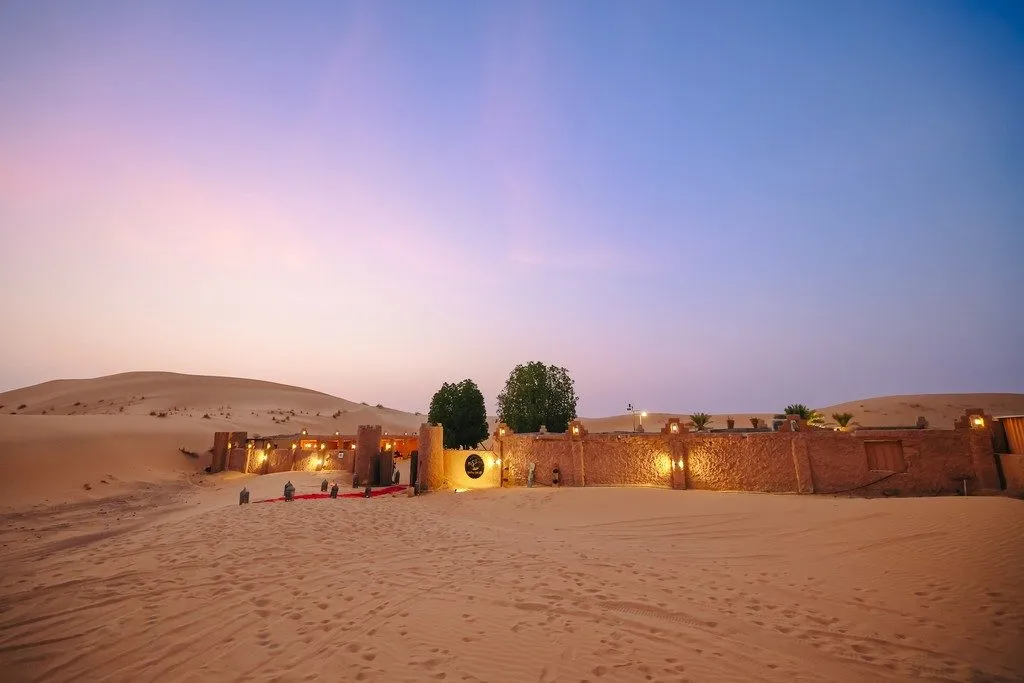
When a group occasion in Abu Dhabi gets to the venue stage, the shortlist usually ends up with a hotel function room and a private desert camp on it, and the two are so different that comparing them on price per head tells you almost nothing. A hotel sells you a room inside an operating business with rules that exist for good reasons. A private camp sells you a piece of empty desert with nothing on it until someone builds your event there. Each is clearly better than the other at specific things. This is where the lines fall.
Exclusivity
A hotel ballroom is private in the sense that the door closes. The building is not. There are other guests in the lobby, another function in the room next door, staff moving between both, and a lift you share with a conference. For most occasions that is completely fine, and for a few, a proposal, a family celebration where people want to relax, a company session with commercially sensitive content, it is not.
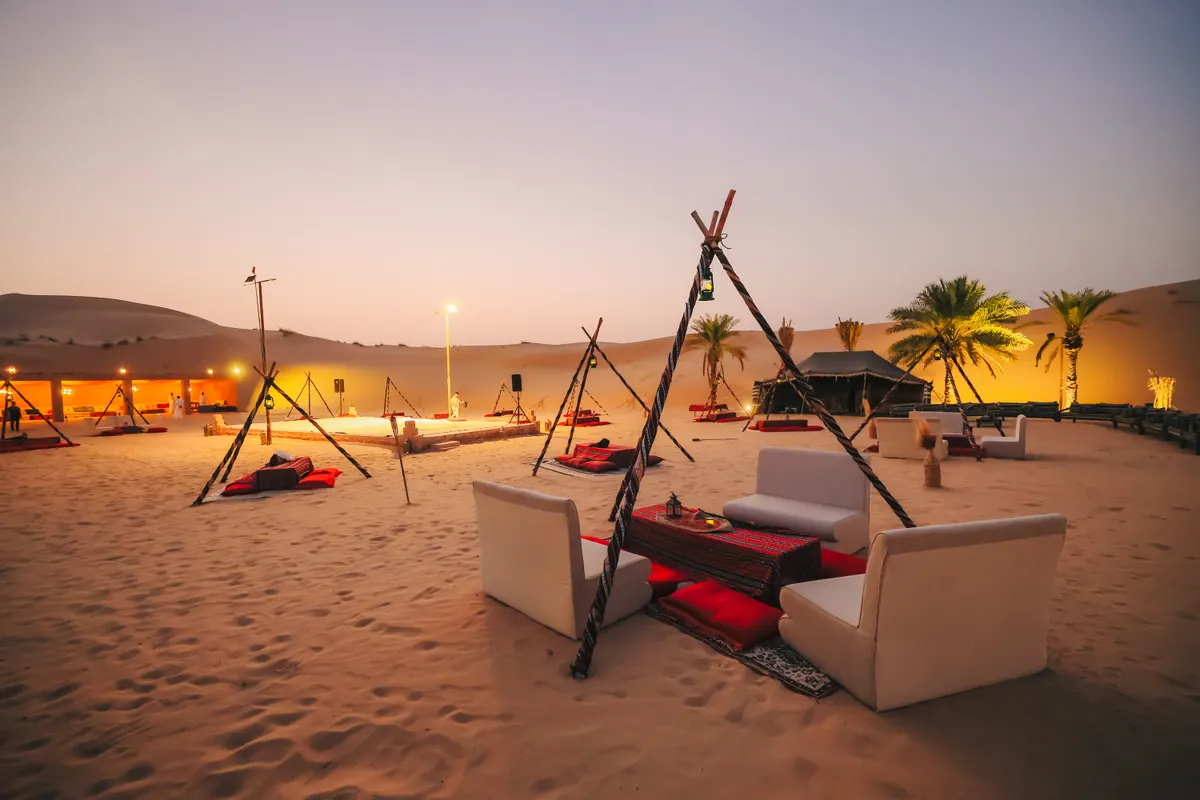
A private camp is exclusive in the fuller sense: the site is yours, there is nothing else within sight, and the only people present are yours and the crew. The caveat is real though. Some operators use "private" for a partitioned area of a shared site, so the question to ask either way is how many other bookings are on the property that night.
Noise, curfews and how late you can go
This is where the gap is widest. Hotels have residential guests upstairs and neighbours outside, so amplified sound has a cut-off, usually somewhere between 11pm and midnight, and it moves indoors before that. Terrace events almost always end earlier than the room they attach to.
An open desert site has nobody to disturb. Music can run late, a band can play outdoors, and the evening can drift rather than ending on a schedule. The trade is regulatory rather than practical: amplified sound and structures in the desert need permits, which a competent operator handles, and we have covered desert event permits in Abu Dhabi separately. Ask who is applying, and by when.
Catering flexibility
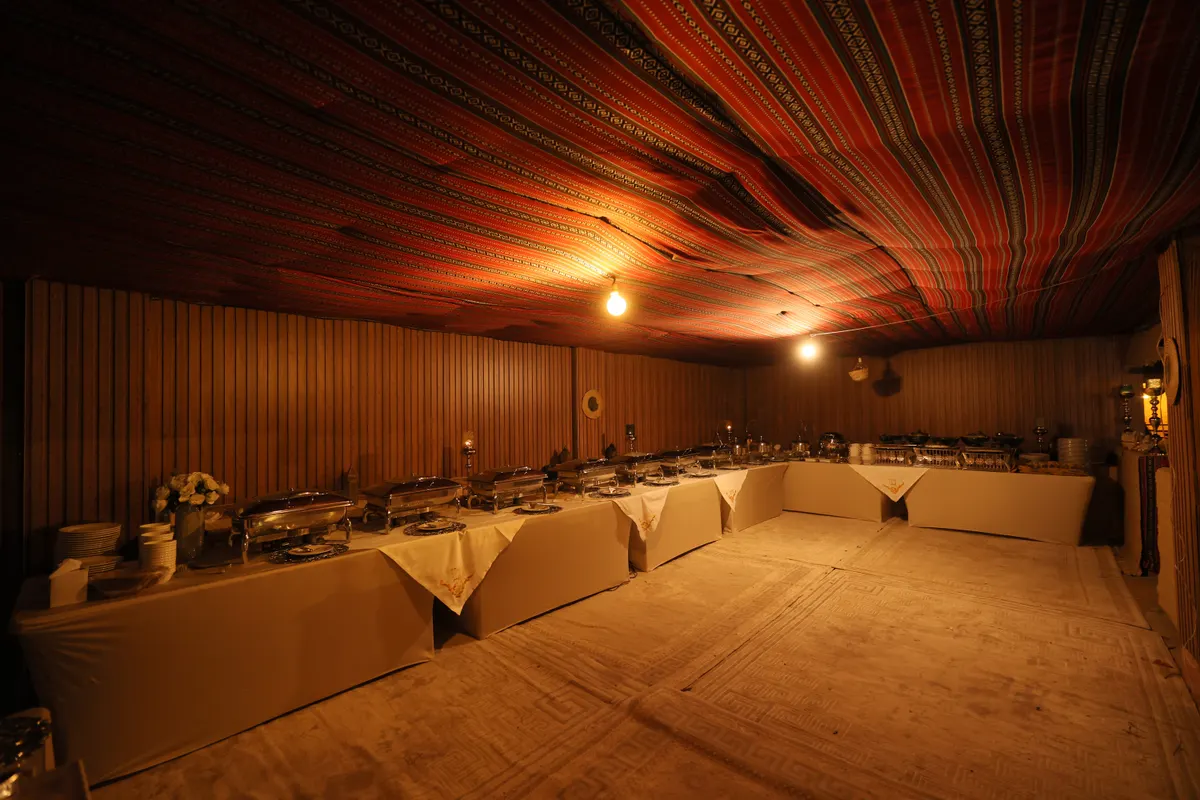
Hotels cater their own events. That gets you a kitchen metres from the room, a food safety regime that is already in place, and a banqueting team who have done this exact thing a thousand times. What it does not usually get you is an outside caterer, a family recipe cooked by someone you trust, or a menu that departs far from the hotel's established banqueting offer.
A camp has no kitchen and therefore no house rule. Food is brought in and cooked live, which opens up whole-lamb service, a live chebab or luqaimat station, a specific regional menu, or a caterer the family has used for twenty years. The corresponding risk is that everything, including the cold chain, has to be built and managed on site, so this is the axis where the operator's competence matters most. Our private dining guide looks at the formats in more detail.
Decor and what you are allowed to change
A ballroom arrives with a carpet, a ceiling, fixed lighting, and a look that you dress rather than replace. Rigging points are where they are. Anything attached to a wall needs approval, and the room will be reset for another client the next morning.
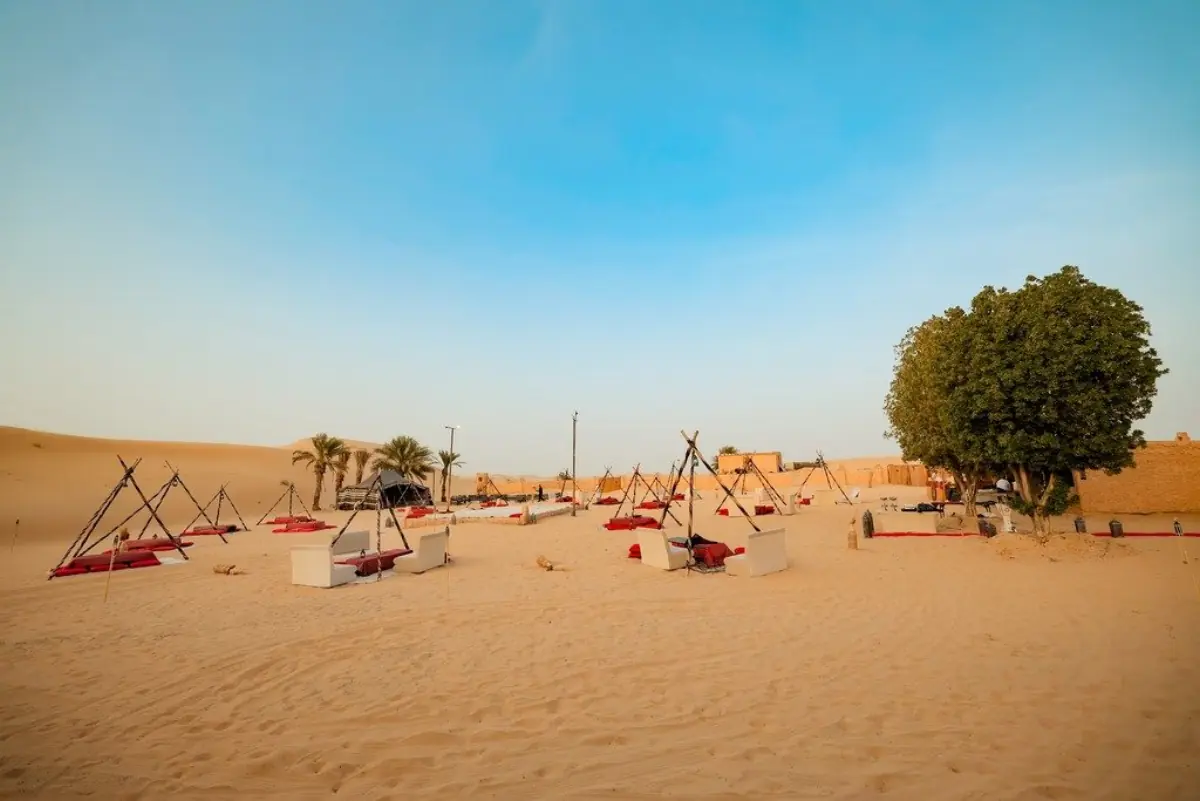
A desert site arrives with nothing, which is both the appeal and the work. Every table, light, floor and structure is brought in, so the aesthetic can be whatever it should be with no house style to negotiate around. That freedom has a cost in build time and in logistics, and it is the main reason a desert quote is shaped differently from a hotel one. Our desert event pricing page explains what actually drives the number.
Timings
Hotel events run in slots. You get a room from a time to a time, with a setup window before and a strike window after, and a wedding in the same space the following afternoon shapes both. A desert build is set by your programme instead, which is why a sunset ceremony, a two-hour gap, and a late dinner is straightforward in the desert and awkward in a function room.
Transport, and the thing people forget
The hotel wins here without much argument. Guests drive themselves, park underneath, and leave when they want. Some of them are staying in the building.
A desert site 45 minutes from the city needs a transport plan: a meeting point on tarmac, 4x4 transfers in, and a departure schedule that works for people who have been up since morning. It is entirely manageable and it is a real piece of planning. Guests who want to leave early cannot simply order a taxi, so build the transport around the guest list rather than the other way around. For companies, our corporate desert events page covers how the logistics usually get structured.
Where the hotel genuinely wins
- Weather cover. A ballroom is indifferent to a windy evening or an unseasonal rain shower. A desert build is not, and although wet weather is rare here, wind is not.
- Summer. Between June and September a hotel is simply the more comfortable answer for a daytime or early-evening event.
- Accessibility. Sand is difficult for wheelchairs, walking frames and anyone unsteady on their feet. Matting and hard flooring help a lot but do not fully solve it. If several guests have mobility needs, the hotel is the kinder choice.
- Guests staying over. Rooms upstairs, with a bath and a lock, beat a tent for a lot of people, particularly older relatives.
- Ease. A hotel has done your event before. There is a banqueting sheet, a fixed process, and far fewer moving parts, and for a straightforward occasion that is worth a great deal.
- Very large numbers. Above a few hundred guests, a purpose-built ballroom handles the flow better than a temporary site.
Where the camp genuinely wins
- The occasion needs to feel unlike other occasions. Guests remember the setting more than the menu, and a hotel function room resembles every other one they have attended.
- Total privacy. No other function, no lobby, no strangers.
- A late, unhurried evening with outdoor music and no curfew imposed by residents upstairs.
- A menu or a caterer of your choosing rather than a banqueting list.
- Winter, obviously. October to April is when the desert is at its best and hotel terraces are competing on the same weekends.
- Groups of roughly 10 to 150. Big enough that a restaurant will not do, small enough that a site build stays sensible.
Our own site at Al Khatim, Khayal Al Sahra, sits in that band. It is a private camp with 10 bedrooms and 20 beds if the occasion runs overnight, and considerably larger for a dinner where people go home the same night. It works as an exclusive-use events venue and, for smaller overnight groups, as an Airbnb desert camp. Pricing depends on the date and the build, so it comes as a proposal rather than a per-head figure.
A short way to decide
Ask what would ruin the evening. If the answer is bad weather, a difficult journey for elderly guests, or anything going wrong logistically, book the hotel. If the answer is that it will feel like every other party these guests have attended, book the desert. For weddings specifically, our desert weddings page and the gala dinner venues guide cover the format questions that come next.
FAQs
Is a private desert camp more expensive than a hotel?
It depends on the group size. A hotel charges per head, so the cost rises steadily with numbers. A camp is quoted per booking because the site and the build cost the same whoever comes, which makes it expensive for a very small group and competitive for a large one.
What happens if the weather turns?
Wind is the realistic risk rather than rain. Ask the operator what the contingency is, whether that is a covered majlis, a shifted timeline or a postponement clause, and get it in writing before you sign.
Can guests with limited mobility attend a desert event?
Often yes, with hard flooring, matting from the drop-off point and vehicle access close to the seating. It takes planning, and if several guests are affected a hotel remains the easier and kinder option.
How late can a desert event run?
Later than a hotel, since there are no residents to disturb, though amplified sound still sits inside the permit granted for the event. Confirm the sound cut-off with your operator rather than assuming there is none.
Can we bring our own caterer to a desert camp?
Usually, and it is one of the main reasons people choose the format. Confirm how the cold chain, cooking equipment and food safety are handled on site, since a camp has no permanent kitchen behind it.
How far in advance should we book?
For a peak-season Friday or Saturday between October and April, several months. A full site build needs more lead time than a hotel booking does, and the good dates go early.
Related guides
Tabassum founded Sparkling Sandset in 2012 and has run the Al Khatim camp through more than 500 private weddings, celebrations and cultural events since. She writes about the celebration and hospitality side of the business: weddings, birthdays, cultural programming and what it actually takes to host a private desert night well.