
Iftar and Suhoor in the Desert: Planning Around Ramadan
A common assumption among newer residents is that Ramadan is a quiet month for events. It is one of our busiest, and the events are simply built differently.
The timing is not flexible
Iftar begins at Maghrib, the moment of sunset, and it is exact. Not approximately sunset, the call to prayer is the start, and guests who have fasted since dawn will be watching the clock.
Everything is built backwards from that. Guests arrive 45 to 60 minutes before, which gives time to settle without a long wait while fasting. Dates and water at the tables before the call, so nothing has to be carried at the moment itself.
Because Ramadan moves about eleven days earlier each year, the sunset time shifts significantly year to year, and a run sheet from last year will not transfer.
How an Iftar unfolds
Guests seated and settled. Dates and laban or water on the table. The call to prayer, and the fast is broken quietly, this is not a moment for a host to make a speech over.
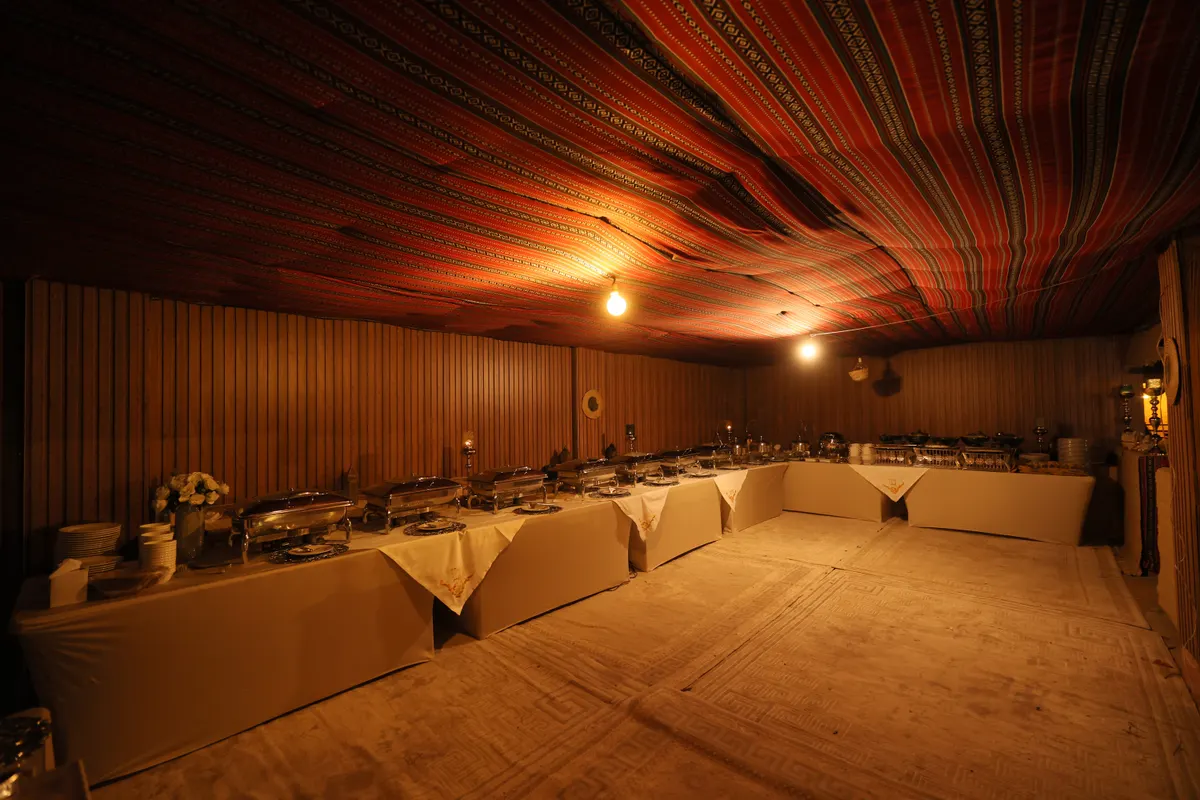
A prayer break follows, so provide a clean prayer area with mats and correct qibla direction. Then the meal proper, unhurried, usually a generous buffet or family-style service because people have not eaten all day and want choice rather than a plated portion.
Suhoor
The pre-dawn meal, and a very different event: late night, relaxed, closer to a long social gathering than a dinner. Runs from around 10pm until an hour or so before Fajr.
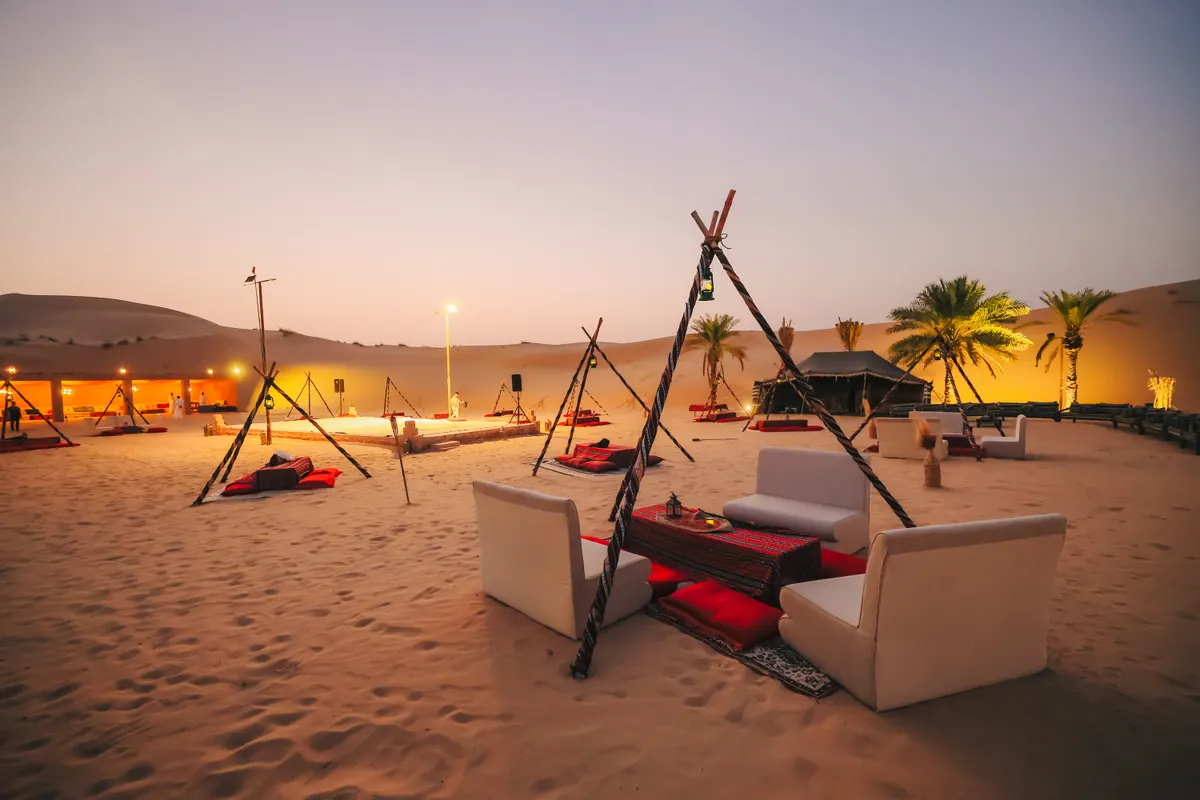
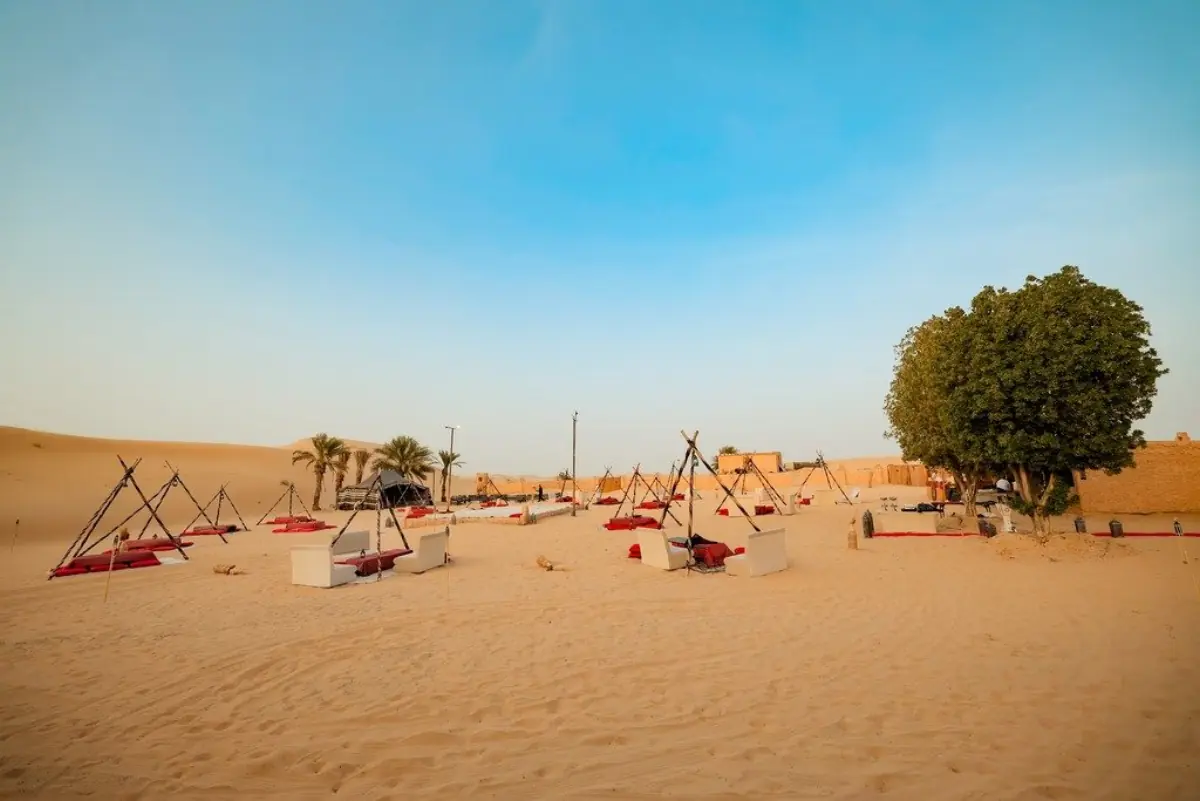
Suhoor in the desert works beautifully because the night is the point. Majlis seating, shisha where appropriate, quiet oud rather than a programme, and the sky. It is the most atmospheric format we run and the least known, and it sits well alongside the other after-dark options in our Abu Dhabi at night guide.
What is appropriate, and what is not
- Appropriate: generous hospitality, majlis seating, oud or qanun at low volume, cultural context, Emirati dishes, dates and Arabic coffee.
- Not appropriate: amplified entertainment, dancing, fire shows, loud music, and alcohol.
- Consideration: not everyone present is fasting, and that is fine. What matters is that the event's centre of gravity respects those who are.
Corporate Iftar
Widely done and genuinely valued when handled properly. Points worth getting right: do not schedule speeches before Iftar, keep any business content short and after the meal, provide the prayer area without being asked, and make sure non-Muslim colleagues understand the timing so nobody is eating early at the back.
Done well, a corporate Iftar does more for a mixed team than most team-building days.
Booking
Ramadan dates and the Eid week immediately after are among the busiest of the year. Book months rather than weeks ahead, and confirm the exact Maghrib time for your specific date rather than assuming.
FAQs
Can non-Muslims attend Iftar?
Yes, and they are welcome. It is one of the most genuinely hospitable occasions in the calendar.
Can we serve alcohol?
No. It is inappropriate during Ramadan and we would decline the request.
Is entertainment allowed?
Quiet instrumental music is generally acceptable. Amplified performance, dancing and fire shows are not.
What about Eid?
Eid is a celebration and the constraints lift. Family and private celebrations during Eid are a large part of what we run, and they book out early.
Related guides
Tabassum founded Sparkling Sandset in 2012 and has run the Al Khatim camp through more than 500 private weddings, celebrations and cultural events since. She writes about the celebration and hospitality side of the business: weddings, birthdays, cultural programming and what it actually takes to host a private desert night well.