
Hosting International VIPs in Abu Dhabi: A Sample Itinerary Framework

Hosting an international VIP delegation in Abu Dhabi is a different exercise from running a standard corporate visit. The itinerary has to work at two speeds at once: efficient enough to respect a busy schedule, and considered enough that guests feel genuinely hosted rather than processed through a series of meetings. This is a sample framework for that kind of visit, built around a signature desert evening as the moment the trip is remembered by, with the rest of the itinerary designed to support it rather than compete with it.
What VIP hosting actually requires
Beyond logistics, hosting delegations, government guests or senior executives well comes down to three things: a single point of contact managing the whole visit rather than several disconnected suppliers, genuine cultural awareness rather than a generic itinerary applied to any destination, and enough flexibility built in that a delayed flight or a moved meeting does not unravel the day. A DMC or planner should be able to answer, without hesitation, who is meeting the delegation on arrival and who is responsible if the schedule slips by an hour.
Track record matters more than a polished proposal here. Ask a prospective host or DMC how many comparable delegations they have handled, what actually went wrong on a past visit and how it was resolved, and whether the same team runs the visit end to end or hands off between arrival, meetings and the evening programme. A single continuous team, rather than several suppliers stitched together by an itinerary document, is usually the difference between a visit that feels seamless and one that feels assembled.
Arrival sets the tone
For genuinely senior guests, arrival is often handled through a dedicated terminal service with fast-tracked immigration and a private vehicle waiting airside. Even without that level of access, a warm, unhurried arrival, a named greeter, refreshments in the car, no waiting around for paperwork, tells guests immediately how the rest of the visit will be run. Build real buffer into arrival-day scheduling; nothing undermines a VIP programme faster than a guest arriving jet-lagged into a tight agenda.
A sample two-day framework
The shape that works reliably for a short, high-value visit:
- Day 1, morning: arrival, private transfer, light refreshment and rest at the hotel before anything is scheduled.
- Day 1, afternoon: business meetings or a site visit, kept to a realistic number rather than back to back.
- Day 1, evening: the signature desert evening, timed to arrive before sunset.
- Day 2, morning: further meetings, or a cultural visit in the city depending on the delegation's interests.
- Day 2, afternoon: free time or shopping, then departure preparations.
Putting the desert evening on the first night rather than the last works well for shorter visits: it gives the delegation an early, memorable moment of genuine hospitality that sets a warm tone for the meetings that follow, rather than saving the highlight for a rushed final evening before an early departure.
The desert evening as the signature moment
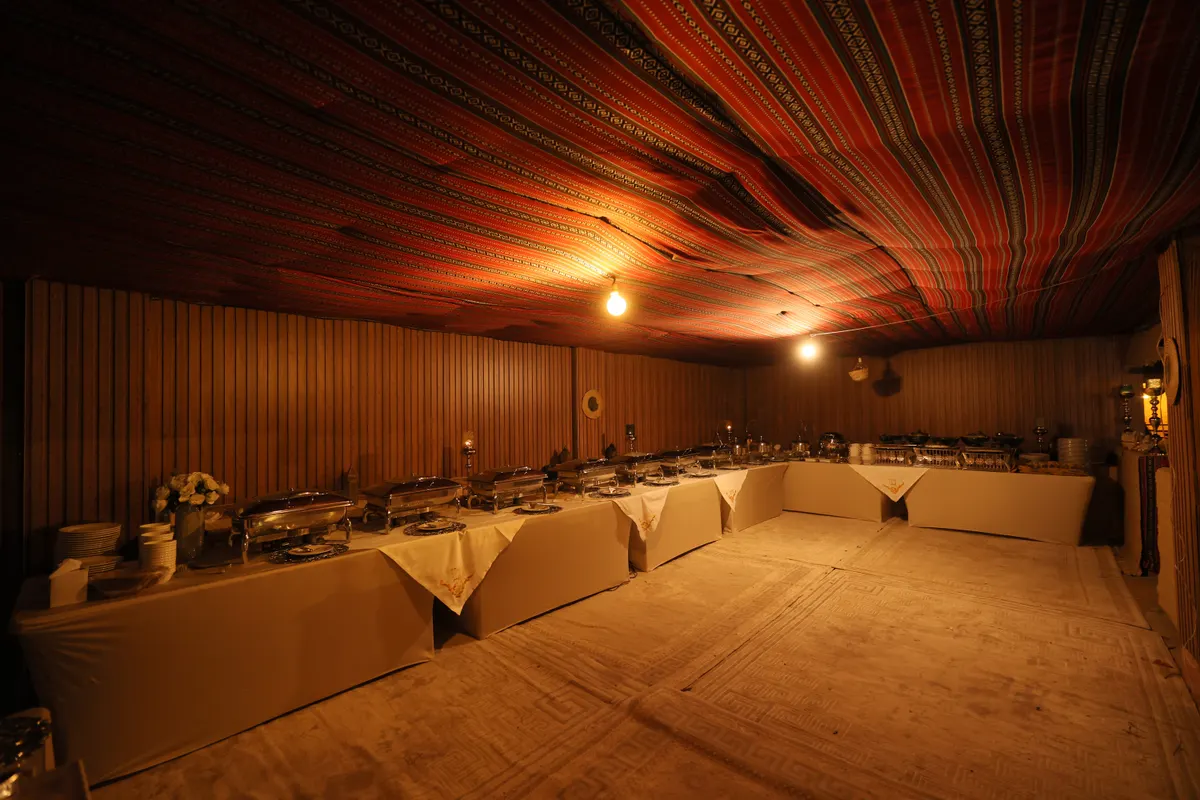
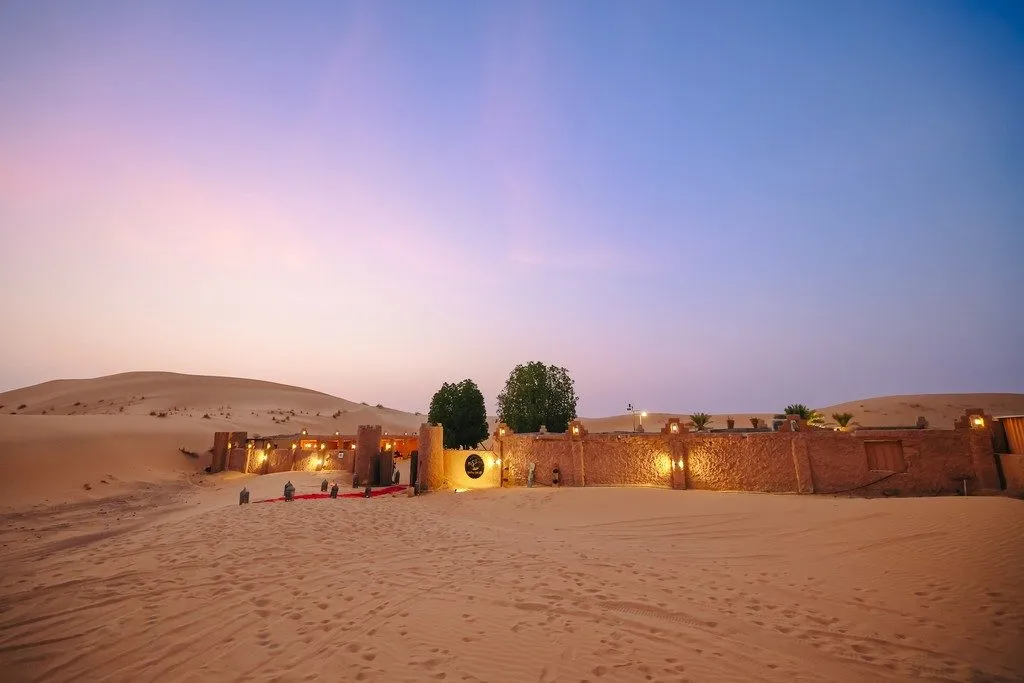
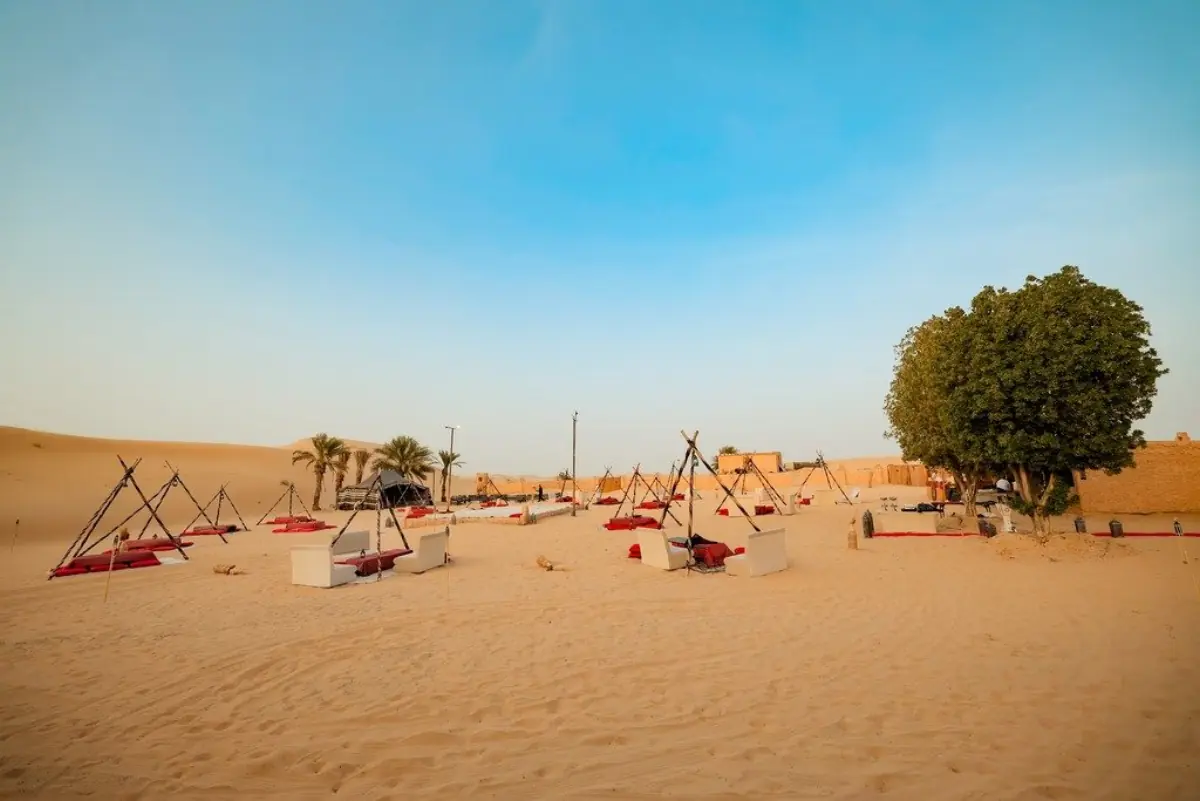
For visiting delegations, a private desert evening delivers something a city itinerary cannot: a setting that is unmistakably of the UAE, entirely private, and unlike anywhere the group will have been meaningfully hosted before. Arrival by convoy as the light turns, a formal welcome with Arabic coffee and dates, a falconry demonstration or cultural programme that reads as hospitality rather than performance, and dinner served properly rather than buffet-style for a genuinely senior group. The setting also does diplomatic work a boardroom cannot: informal conversation around a fire, away from a meeting-room table, tends to move relationships forward in a way structured meetings do not. See our corporate events page and our guide to gala dinner venues beyond the ballroom for how the desert format compares to a hotel setting.
Protocol and cultural considerations
A few details matter more for VIP and delegation guests than for a standard corporate group: confirm dietary requirements and halal compliance in writing rather than assuming, plan seating and any formal welcome line against the delegation's own protocol expectations, and check in advance whether the visit involves any gender-specific seating or hosting conventions that need to be respected. None of this needs to be complicated, but it needs to be asked rather than guessed, and it needs to be asked early enough that the site and catering plan can accommodate the answer. Our guide to Emirati cultural experiences covers the hospitality traditions a desert evening draws on.
Departure
Treat the final transfer with the same care as the arrival. A calm, buffered departure, ideally with a small parting gesture such as corporate gifting or a locally made memento, closes the visit on the same note it opened on, rather than ending on a rushed dash to the airport.
FAQs
Should the desert evening go on the first night or the last?
For shorter visits, the first night works well: it sets a warm tone early. For longer, multi-day programmes, closing on the desert evening before departure can work just as effectively.
How do you handle protocol for government or royal delegations?
Confirm the delegation's own protocol office requirements directly rather than assuming, particularly around seating, welcome formalities and any gender-specific hosting conventions.
Can dietary and halal requirements be guaranteed?
Yes, when confirmed in writing at the briefing stage. Halal compliance is standard across our catering, and specific dietary needs are tracked against the guest list rather than handled at the table.
How much lead time does a VIP programme need?
Several weeks at minimum, and considerably more for larger delegations, government visits, or dates that overlap peak season or a major event week.
Related guides

Tabassum founded Sparkling Sandset in 2012 and has run the Al Khatim camp through more than 500 private weddings, celebrations and cultural events since. She writes about the celebration and hospitality side of the business: weddings, birthdays, cultural programming and what it actually takes to host a private desert night well.