
Falconry in the UAE: History, Culture and What an Experience Involves
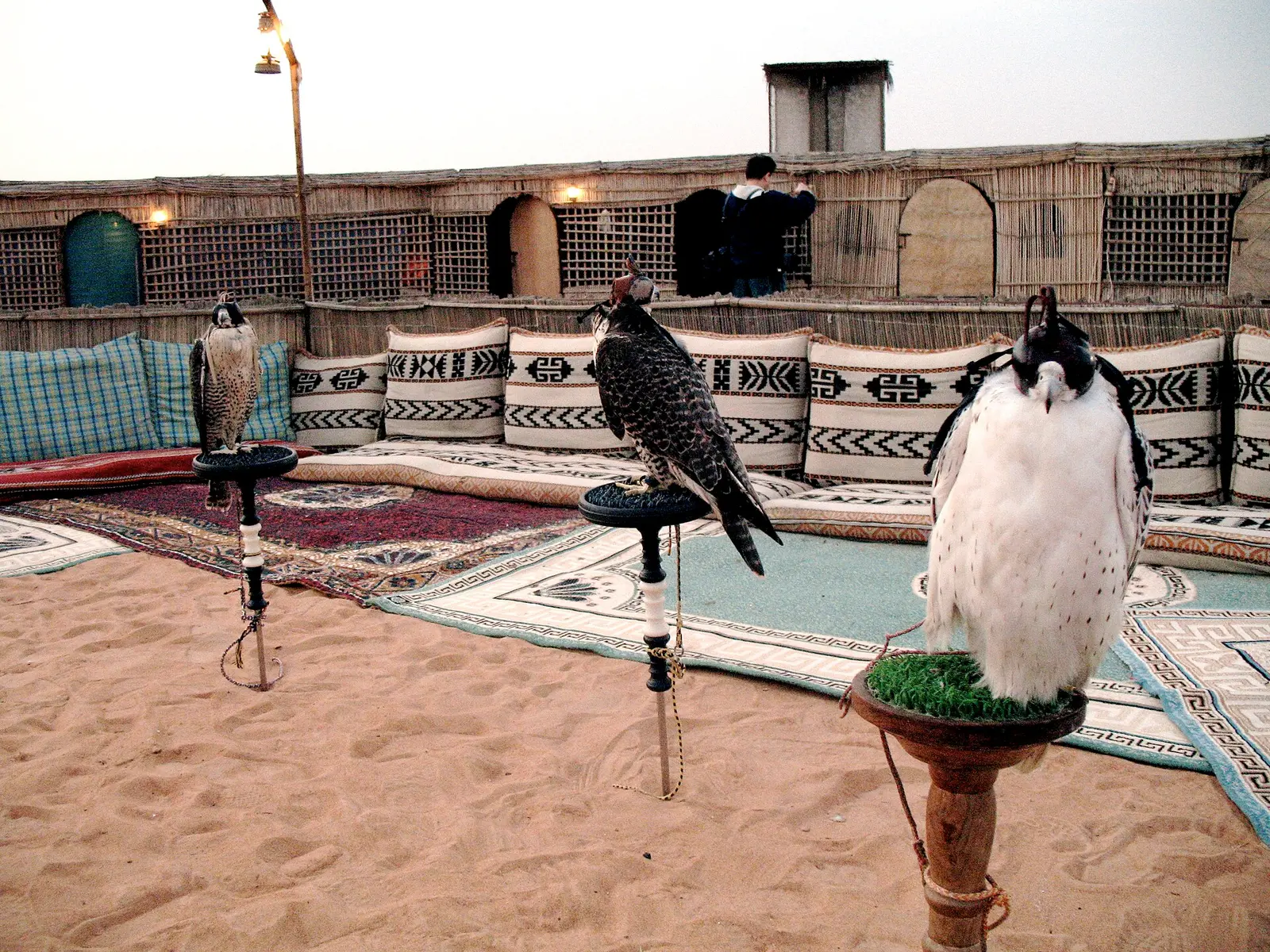
Photo: Flickr user denn (Denise Chan), CC BY-SA 2.0
Falconry is the traditional art of training and flying falcons, and in the UAE it is a living heritage practice rather than a tourist show. UNESCO describes it as practised for over 4,000 years and originally a way of gathering food. The UAE led the 2010 nomination that placed falconry on UNESCO's Representative List of the Intangible Cultural Heritage of Humanity, and today the country has a falcon hospital, a passport scheme for the birds and an annual exhibition devoted partly to the sport.
The short version
- Falconry has been on UNESCO's list since 2010. The UAE led the first, multinational nomination, and UNESCO's page now covers 24 countries.
- It began as a Bedouin survival skill and became a sport and a heritage practice, handed down through families, mentoring and clubs.
- The modern UAE has the Abu Dhabi Falcon Hospital (opened in 1999), falcon passports (more than 28,000 issued by 2018) and ADIHEX, the annual exhibition at ADNEC.
- A falconry experience for guests is a licensed falconer, the birds and about forty-five minutes. Ask about welfare, and keep it to the cooler months and hours.
What falconry means in the UAE
UNESCO defines falconry as the traditional art and practice of training and flying falcons (sometimes eagles, hawks and other birds of prey), and notes that it began as a means of gathering food and has since taken on social, recreational and nature-connecting roles. It is passed on from generation to generation through mentoring, in families and through training clubs. In the UAE the bird is treated as a hunting partner and a respected companion rather than a possession, which is why a falconer's behaviour around the birds tells you more than any explanation.
A short history
For the Bedouin of the Arabian Peninsula falconry was a way to eat. As oil changed life in the Gulf, falconry stopped being about survival and became a sport and a point of pride. Sheikh Zayed bin Sultan Al Nahyan regarded falconry and hunting as an important part of Emirati heritage, and Abu Dhabi was bringing falconers from different countries together half a century ago: Gulf News reports an international falconry conference held in Abu Dhabi in 1976, with a race between Arab and foreign falconers. The Abu Dhabi Falcon Hospital opened on 3 October 1999, and in November 2010 the UAE led an eleven-country nomination that UNESCO's Intergovernmental Committee approved in Nairobi. The listing has since been extended, and UNESCO's page now names 24 countries.
Falconry in the UAE today
- Abu Dhabi Falcon Hospital. Opened in 1999 and described by its own site as the first public institution in the UAE providing comprehensive veterinary care exclusively for falcons. It calls itself the largest falcon hospital in the world and offers visitor tours of two or three hours at Al Shamkha, Abu Dhabi.
- Falcon passports. The UAE scheme records each bird's origin and permit number and lets a falcon travel abroad without a separate CITES permit for every trip. Gulf News reported that more than 28,000 falcons had been issued passports by 2018.
- ADIHEX. The Abu Dhabi International Hunting and Equestrian Exhibition is held at ADNEC with falcon auctions in its programme, in partnership with the Emirates Falconers' Club. The 2026 edition, its 23rd, ran from 28 August to 6 September.
- World Falconry Day. Marked each year on 16 November, the anniversary of the 2010 recognition. The Emirates Falconers' Club says falconry is now practised legally in 90 countries by more than 100,000 falconers.
Why it matters here
Before oil, falconry was a survival practice. Bedouin communities trapped migrating falcons, trained them over a season to hunt houbara and hare, then traditionally released them before the summer. The bird was a hunting partner rather than a possession, and that framing survives.
Today it is a national passion with hospitals dedicated to falcon medicine, falcons carried in aircraft cabins with their own passports, and competitions that draw serious money. Understanding that changes how you present it at an event: this is hospitality offering something the hosts genuinely value, not a novelty act. Our broader guide to Emirati hospitality traditions for business hosts covers the wider etiquette that this kind of offering sits inside.
Where to see falconry in the UAE
- A visit to the Abu Dhabi Falcon Hospital. Book a tour through its site; times are limited, so check before you travel.
- ADIHEX at ADNEC. Held in late summer, with falcon auctions and demonstrations. Check ADNEC for the next edition's dates.
- Sheikh Zayed Festival. Last season's programme included camel, falconry and dhow-sailing competitions. Check this year's programme in our festival guide.
- A private demonstration. At a camp, for a group or a private occasion, with a licensed falconer and the birds, as described below.
What an experience actually involves
A licensed falconer, the birds, and usually forty-five minutes. Guests learn the equipment, the burqa hood, the mangalah glove, the jesses, and the falconer explains training, feeding and the relationship between handler and bird.
Then guests hold a falcon on the glove. That is the moment: the weight is more than people expect, the bird is calmer than they expect, and the eye contact tends to silence a group.
Where space and permissions allow, a flying demonstration with a lure shows the speed properly. That needs open ground and is not always possible.
Why it works at events
It is the most accessible cultural element we offer. No fitness requirement, no age barrier beyond basic care, works for a group of eight or a rotation through two hundred. For mixed-seniority corporate groups where a physical challenge would exclude people, it is often the right answer.
It also photographs exceptionally well, and for international guests it is the element most likely to end up in their own posts. See our wider roundup of Emirati cultural performances for private events in Abu Dhabi for what else pairs well with a falconry session.
Welfare, which you should ask about
Reasonable questions for any operator: how long are the birds working, how many sessions in a day, where do they rest between, and is the falconer licensed?
Good operations rotate birds, keep sessions short, work in cooler hours and give the falconer authority to stop. A falconer who defers to the client on the bird's behalf is a bad sign. We work with licensed falconers who have that authority, and they use it.
Timing
October to April, and within that the cooler ends of the day. Falcons do not work well in high heat and a responsible falconer will decline rather than push it.
FAQs
What is falconry in the UAE?
The traditional art of training and flying falcons, practised in the Emirates for generations and recognised by UNESCO as intangible cultural heritage. It began as a Bedouin way of gathering food and is now a sport, a heritage practice and a source of national pride.
Why is falconry important in the UAE?
Because it connects modern Emirati life to a Bedouin past, and because the leadership has treated it as heritage worth preserving. Sheikh Zayed regarded falconry as an important part of Emirati heritage, and the UAE led the 2010 UNESCO nomination.
Is falconry a traditional sport of the UAE?
Yes. It is one of the best-known traditional sports and heritage practices of the country, with its own club, exhibition, hospital and festivals, and with falcon passports for travelling birds.
When did UNESCO recognise falconry?
In November 2010, when UNESCO's Intergovernmental Committee approved the first multinational nomination, led by the UAE. UNESCO has extended the listing since, and its page now names 24 countries.
Where can you see falconry in Abu Dhabi?
At the Abu Dhabi Falcon Hospital, which runs visitor tours; at ADIHEX in late summer; at heritage festivals during the season; and at private demonstrations with a licensed falconer, such as at a desert camp.
Do falcons have passports in the UAE?
Yes. The UAE's falcon passport records each bird's origin and permit number and allows the falcon to travel without a CITES permit for each trip. More than 28,000 falcons had been issued passports by 2018, according to Gulf News.
What is the Abu Dhabi Falcon Hospital?
A hospital dedicated to falcons, opened on 3 October 1999 and described on its own site as the largest falcon hospital in the world. It also runs visitor tours of two or three hours at Al Shamkha, Abu Dhabi.
When is the best time for a falconry experience in the UAE?
October to April, and within that the cooler ends of the day. Falcons do not work well in high heat, and a responsible falconer will decline rather than push it.
Can guests hold the falcon?
Yes, on a glove with the falconer present. It is the part everyone remembers.
Is it safe for children?
Yes, with the falconer handling and a briefing first. Calm children take to it particularly well.
Can it run indoors or at an office?
A static demonstration can work in a large lobby or atrium with advance arrangement. Flying needs open ground.
Is it appropriate for a corporate audience?
Very. It is educational rather than performative, which is exactly why it lands with audiences that would find a floor show awkward.
Sources
- UNESCO: Falconry, a living human heritage (Representative List of the Intangible Cultural Heritage of Humanity)
- Abu Dhabi Falcon Hospital: company site (opening, services, tours)
- Gulf News: More than 28,000 passports issued to falcons since 2002 (15 September 2018)
- Gulf News: ADIHEX 2026, rare newspaper page reveals Abu Dhabi's falconry history 50 years ago (1 September 2026)
- WAM: UAE marks World Falconry Day
Related guides
Tabassum founded Sparkling Sandset in 2012 and has run the Al Khatim camp through more than 500 private weddings, celebrations and cultural events since. She writes about the celebration and hospitality side of the business: weddings, birthdays, cultural programming and what it actually takes to host a private desert night well.