
Sleeping in the Desert: What to Expect at Night
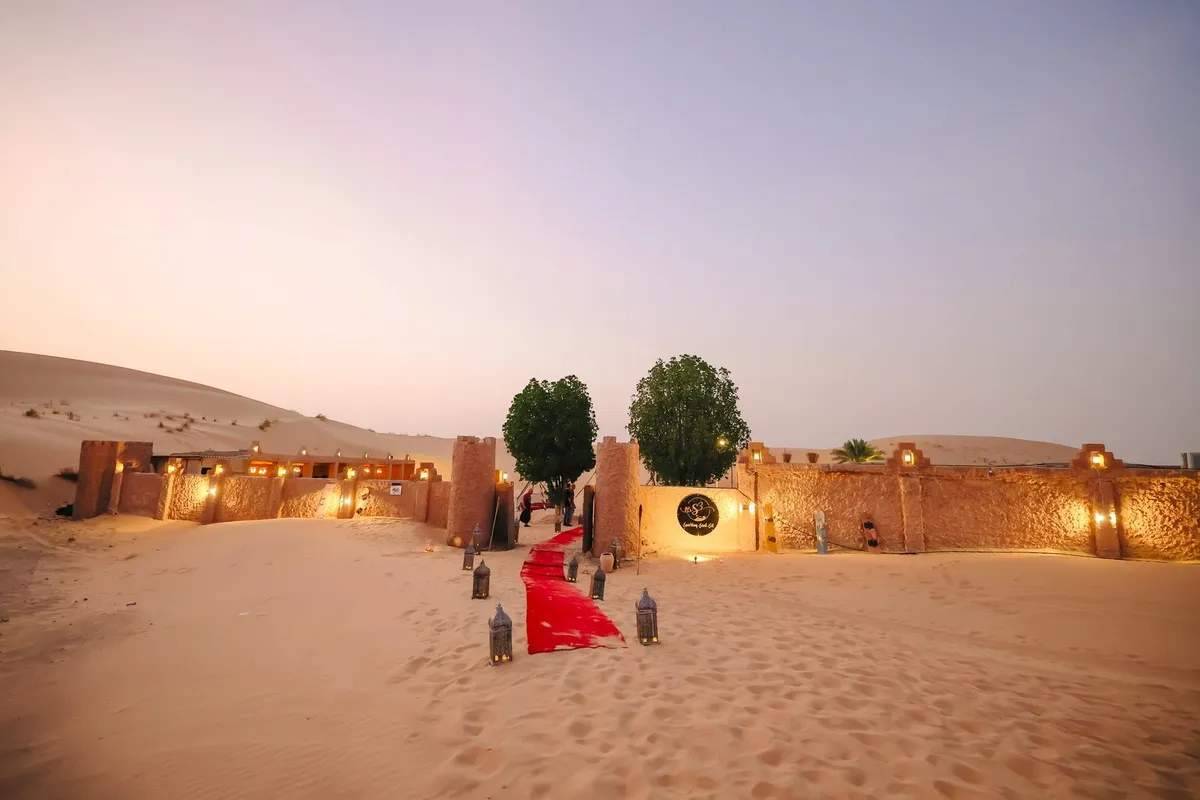
Most descriptions of a desert night are written to sell one. This one is written for people who have booked and are now quietly wondering what they have done. The honest summary: the first two hours after dark are better than the photographs suggest, the middle of the night is colder and stranger than anyone warns you, and the twenty minutes around sunrise are the reason people come back. Here is the whole of it, including the parts that are hard.
The temperature drop is the big one
Sand does not hold heat. Once the sun goes down, the ground gives up its warmth to a clear sky in a matter of hours, and there is no humidity and no built environment to slow it. In winter, a 28C afternoon can be a 12C night, and in the deep dunes it goes lower. Even in April a comfortable evening turns into a cold 4am.
The practical effect is that people underdress for the second half of the night and wake up at three in the morning genuinely cold. Bring a jacket you think you will not need. If you are given a blanket at the fire, keep it. The drop is steepest between about 2am and dawn, which is exactly when you are least willing to get up and find another layer, so put it within reach before you sleep.
The quiet is not what you expect
People describe desert silence as peaceful. What it is, first, is unsettling. There is no traffic hum, no air conditioning, no neighbour's television, and city ears keep reaching for a background layer that is not there. For the first half hour you will hear your own pulse.
Then you start hearing what is actually there, which is more than nothing. Canvas moving. Sand hissing across the top of a dune. A camel somewhere shifting its weight. Someone two tents away turning over, because sound carries much further in still, dry air than it does at home. That last one matters if you are on a shared site: a group still talking at midnight is fully audible from anywhere on it.
What the light does at dawn
Set an alarm. This is the single piece of advice that people thank us for. Roughly forty minutes before sunrise, the eastern sky goes a colour that does not appear in the city, and the dunes do something strange: because the light comes in almost flat, every ripple in the sand throws a shadow, and a surface that looked smooth all evening turns into fine ridged texture running to the horizon.
It lasts about twenty-five minutes and then it is over, the light hardens, and it becomes an ordinary bright morning. If you are travelling with a camera, this window is worth more than the whole evening programme. The other end of the same phenomenon is the night sky, which our desert stargazing guide covers in detail, including how to time a booking around a new moon.
Sand and wind
Sand gets everywhere and there is no technique that prevents it. It will be in your hair, your bag and your bed regardless of how careful you are, and the sooner you decide not to fight it, the better the night goes. Leave shoes outside the tent, keep a spare pair of socks in a sealed bag, and do not bring anything you would be upset to see scratched. Camera bodies and lenses should be changed inside a bag or not at all.
Wind is variable and worth asking about seasonally. Most nights it is a light movement of air. Occasionally, particularly in spring, it picks up enough to move sand at ankle height and rattle the canvas all night. It is rarely dangerous at a serviced camp, but it does affect sleep, and a windy night is the one situation where a solid-walled resort room is objectively better.
Insects and wildlife
Less than you fear. Dry sand does not support mosquitoes, so the biting insect problem that ruins camping elsewhere is largely absent inland. What you may see: beetles, the occasional gecko, moths around any light, and if you are lucky, a desert fox at the edge of the camp after everyone has gone quiet. Scorpions exist and are almost never encountered at a maintained site, though the habit of shaking out shoes in the morning is a good one anyway.
Phone signal, power and the bathroom question
Signal is patchy and drops entirely in dune hollows. Assume you will have a bar or two at best, that data will be slow, and that your battery will drain faster than usual because the phone keeps searching. Take a power bank. Tell whoever needs to know that you will be uncontactable for a stretch.
Bathrooms are the thing people are most anxious about and least willing to ask. The honest range: at a shared tourist camp, communal blocks that are fine but busy at peak times. At a serviced or exclusive-use camp, private or near-private washrooms with running water and a flushing toilet. At a wild camp, whatever you brought and a shovel. Ask for real photographs rather than the marketing set before booking, at any tier, and ask specifically whether the water is running or carried.
The sleeping surface
Beds at a serviced camp are usually proper single or double frames with a mattress and linen, set on a raised platform or on matting rather than directly on sand. The mattress is firmer than a hotel bed. Sand under a tent floor is soft and slightly uneven, which some people find better than a mattress and others find maddening.
Bring earplugs and a sleep mask. There is no curtain, and desert light arrives early and all at once. Our overnight desert camping guide goes further into how a serviced night is structured hour by hour.
What to wear to sleep
- Long sleeves and long legs, in cotton or a light thermal in winter. Not shorts, whatever the afternoon was like.
- Socks. Feet get cold first and stay cold.
- A hoodie or fleece within arm's reach, for the 3am adjustment.
- Nothing you mind sand touching.
- Slip-on shoes by the tent door, for the walk to the washroom in the dark.
The parts people find hard
Three things, honestly. Waking at 3am cold and disoriented, which is common and passes as soon as you add a layer. The absence of a locked door, which bothers light sleepers more than they expect and is much easier on a site with no strangers on it. And the walk to the bathroom in the dark, which is the real reason to check what the washroom setup is before you book rather than after.
None of it is a reason not to go. A first desert night is uncomfortable in small, specific ways and memorable in large ones, and the ratio improves enormously if you know what is coming. If you would rather have the site to yourselves and no unfamiliar voices at midnight, that is what an exclusive-use camp at Al Khatim is for, and the overnight stays page explains how we run the night.
FAQs
How cold does the UAE desert get at night?
In winter it commonly falls to around 10 to 15C inland, and lower in the deep dunes. Even in spring and autumn the drop from afternoon to 4am is large enough to need a jacket.
Are there mosquitoes or scorpions in the desert?
Mosquitoes are largely absent inland because there is no standing water. Scorpions exist but are very rarely encountered at a maintained camp. Shake out your shoes in the morning as a habit.
Is there phone signal at a desert camp?
Patchy. Expect a bar or two, slow data, and no signal at all in the low ground between dunes. Bring a power bank, since the phone drains itself searching.
What are the toilets like at a desert camp?
They range from communal blocks at shared tourist camps to private washrooms with running water at serviced and exclusive-use camps. Ask for real photographs and ask whether the water is plumbed or carried.
Will I actually sleep?
Most people sleep less than at home on the first night and do not mind. Earplugs, a sleep mask and one more layer than you think you need close the gap more than anything else.
Related guides

Tabassum founded Sparkling Sandset in 2012 and has run the Al Khatim camp through more than 500 private weddings, celebrations and cultural events since. She writes about the celebration and hospitality side of the business: weddings, birthdays, cultural programming and what it actually takes to host a private desert night well.