
Corporate Iftar and Suhoor in Abu Dhabi: Hosting Clients and Staff
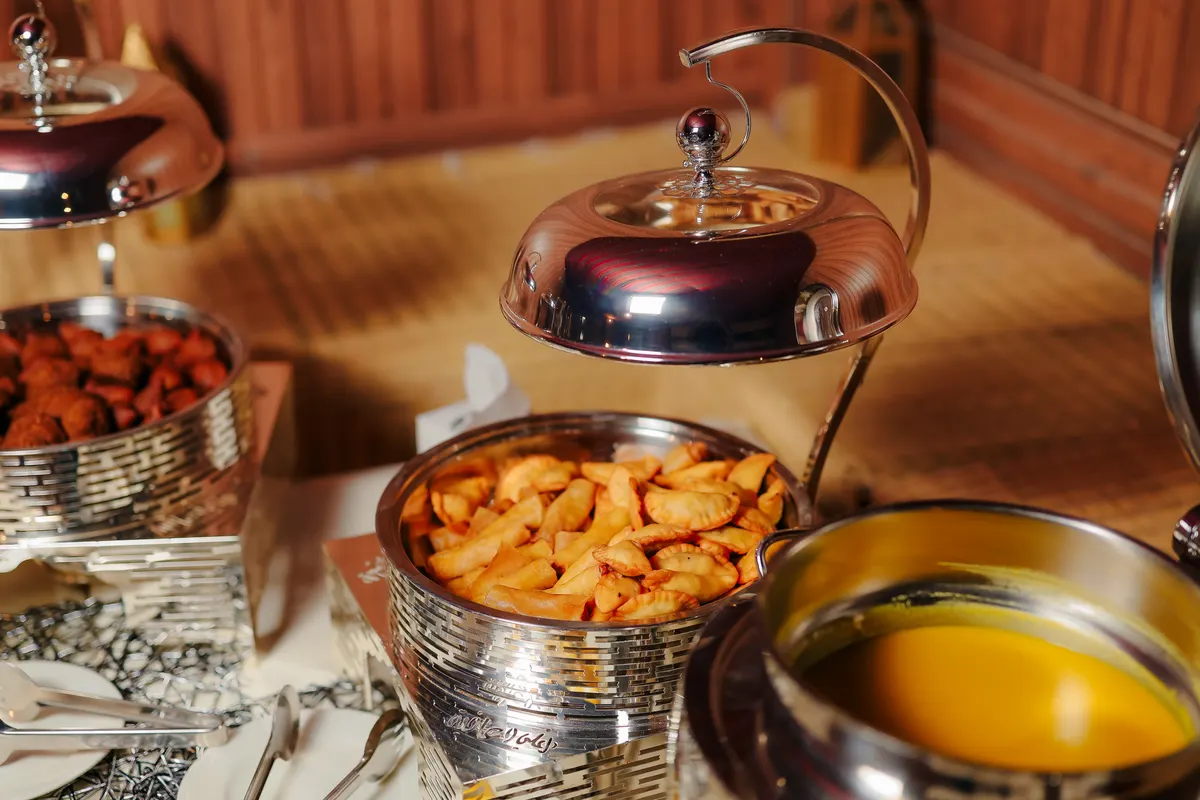
For the general mechanics of hosting an Iftar or Suhoor, the timing around Maghrib, what is and is not appropriate, how the evening unfolds, our guide to Iftar and Suhoor in the desert covers it in full. A corporate Iftar or Suhoor shares all of that structure but adds a layer general guidance does not: who exactly you are hosting, and what that changes about how the evening should be built.
Client Iftar and staff Iftar are not the same event
The most common mistake in corporate Ramadan planning is treating every Iftar the same way. A client-facing Iftar and an internal staff Iftar have different objectives, and building both from the same template produces an evening that half-serves each purpose.
Hosting clients
A client Iftar is a relationship event first and a meal second. The point is unhurried time with people you do not see socially the rest of the year, in a setting that signals the relationship is valued beyond the transactional. Keep the guest list focused rather than broad, a smaller group with real conversation outperforms a large gathering where nobody gets meaningful time with anyone. Business content, if there is any at all, comes after the meal and stays brief. The evening itself is the message.
A desert setting works particularly well here because it removes the usual venue competition, a client who has been to a dozen hotel Iftars this Ramadan has likely not been hosted at a private desert camp, and that distinction registers.
Staff appreciation
An internal staff Iftar is closer to a thank-you than a relationship-building exercise, and the design should reflect that. A broader guest list makes sense here, since the point is inclusion rather than curated intimacy. Leadership presence matters more than production value, staff notice whether senior leaders are actually present and unhurried rather than making a brief appearance. A short, genuine acknowledgement of the team's year works well after the meal, kept to a few minutes rather than a full speech.
For companies wanting to combine appreciation with something more active, a Suhoor gathering later in the evening, less formal and closer to a long social occasion than a structured dinner, is often better received by staff than a second formal Iftar, and it suits a team that already knows each other well.
What both formats have to get right
- Timing is not negotiable. Iftar begins at Maghrib exactly, and a corporate schedule has to bend to that rather than the reverse. Confirm the specific sunset time for your date, since Ramadan shifts roughly eleven days earlier each year and a run sheet from a previous event will not transfer.
- A prayer area, offered without being asked. Clean space, mats, correct qibla direction. For a corporate host, providing this proactively is read as basic competence; failing to provide it is noticed immediately by guests who need it.
- No business content before the meal. Whether the audience is clients or staff, opening with a presentation before anyone has eaten reads as tone-deaf regardless of intent. Any remarks belong after the meal and should stay short.
- Clarity for colleagues who are not fasting. Not every attendee, staff or client, will be observing the fast, and that is entirely normal. What matters is that nobody eats early at the back of the room while the majority waits for Maghrib; brief guests in advance so the evening's centre of gravity stays respectful.
Building the programme
A corporate Iftar or Suhoor should stay closer to hospitality than entertainment. Majlis-style seating, Arabic coffee and dates before the call to prayer, quiet oud or qanun at low volume, and a generous buffet or family-style service once the fast breaks. Amplified entertainment, dancing and anything resembling a standard corporate party format are out of place here regardless of who is hosting.
Where a corporate event can add something a general Iftar does not need: a short cultural or heritage element woven in, particularly valuable for a client audience with a significant international contingent who may not have attended an Iftar before. See our guide to Emirati cultural experiences for formats that suit this without tipping into entertainment.
Booking
Ramadan and the Eid week immediately following are among the busiest periods of the year for desert bookings, and corporate demand for client and staff Iftars adds real pressure on top of private bookings. Book months rather than weeks ahead, and treat the specific Maghrib time for your date as a fixed input to the planning, not a detail to confirm later.
FAQs
Should a client Iftar and a staff Iftar be planned differently?
Yes. A client Iftar works best as a smaller, focused gathering built around relationship time, while a staff Iftar benefits from a broader guest list and genuine leadership presence, since the objectives are different.
Is it appropriate to include any business content at a corporate Iftar?
Only after the meal, and kept brief. Opening with business content before guests have broken their fast reads poorly regardless of the audience.
What if some attendees are not fasting?
Entirely normal and not a problem in itself. Brief non-fasting guests in advance so nobody eats early at the back of the room while others wait for Maghrib.
How far ahead should we book a corporate Iftar or Suhoor?
Months rather than weeks. Ramadan and the following Eid week are among the busiest periods of the year, and corporate demand competes directly with private bookings for the same dates.
Related guides

Younus leads corporate and MICE delivery at Sparkling Sandset, including team-building programmes, incentive groups and DMC partnerships across Abu Dhabi and the wider UAE. He writes about the operational side of corporate events: venue selection, group logistics, facilitation and what changes when the guest list is a client's, not a family's.