
What to Wear to a Desert Wedding in the UAE, for the Couple and for Guests
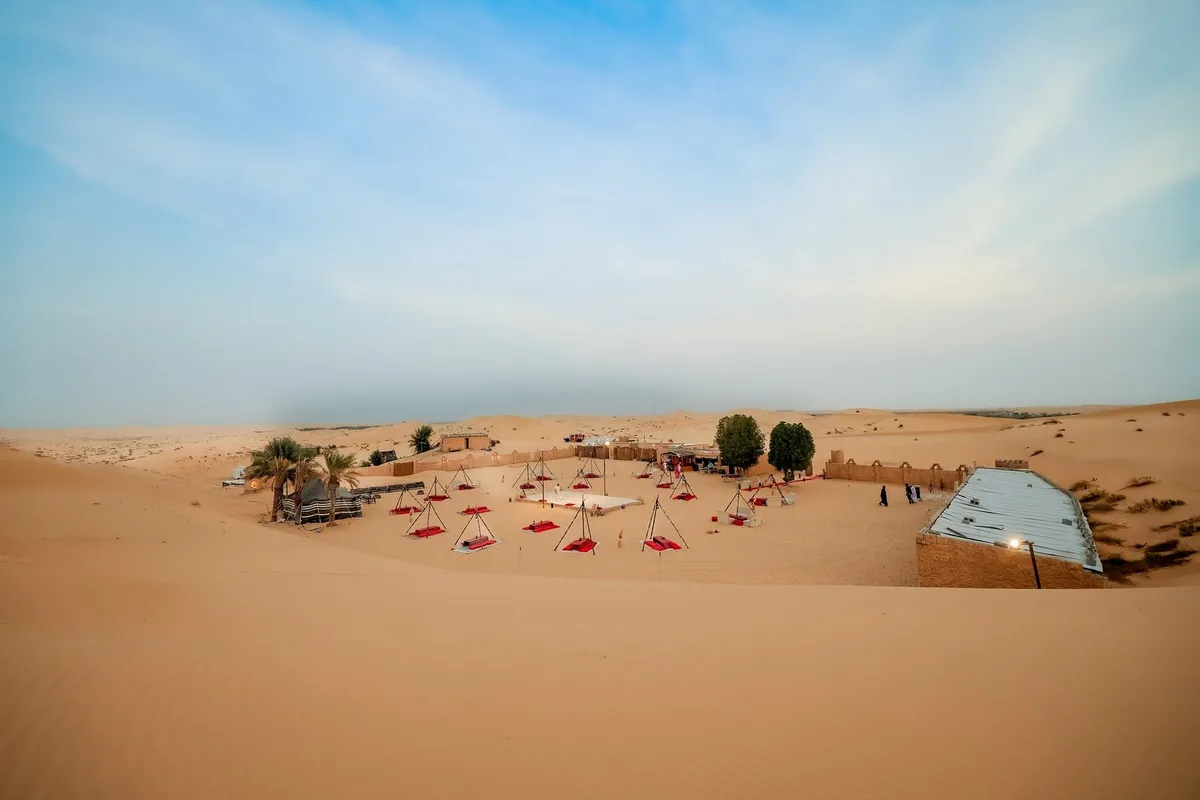
Plenty of good advice exists on what to wear for a casual evening desert safari: trainers, layers, nothing you mind getting sandy. A wedding is a different brief. You are dressed formally, you are likely standing and walking for hours, and there is a photographer capturing all of it.
Here is what actually works, for the couple and for guests, once formality and sand have to share the same outfit. For the planning decisions around the ceremony itself, our guide to planning a desert wedding ceremony covers timing, licensing and the run of the day.
For the couple
For the bride
Hem and train management matters more here than in a ballroom. A dress that trails on carpet will collect sand fast, so ask your stylist about a bustle or a walking length for the reception once the ceremony photographs are done. For the ceremony itself, matted walkways handle the aisle, but photography on open sand is easier in a low block heel or a barefoot, sandal option than in a stiletto that will sink with every step.
For the groom
Structured but breathable fabric works better than a heavy full wool suit, particularly for a summer evening date. Dress shoes are fine for the ceremony and matted areas; if photography is planned further out on the dunes, a second, more practical pair saves the good ones. Bring a layer, a blazer left on through the evening earns its keep once the temperature drops after dark.
For guests: what actually works
Footwear, the detail that decides your evening
Block heels or wedges hold up on sand far better than a thin stiletto heel, which sinks with every step and turns a beautiful outfit into a slow, careful shuffle. Flats are the safest choice if the invitation allows them. Matted walkways typically run from the drop-off to the main seating areas, but reception and dancing usually happen on open ground.
The evening temperature drop
Desert evenings cool noticeably after sunset, and from November through February the drop after dark is significant even when the afternoon felt warm. A light shawl, wrap or jacket that seems unnecessary at arrival becomes essential a few hours in. This matters even in the warmer months, evenings still cool once the sun is down, just less dramatically.
Reading the dress code
"Black-tie desert" is not identical to a ballroom black-tie code, and invitations that use the phrase usually mean it. Formality stays: full-length gowns, tuxedos or elegant kanduras. What changes is the practical allowance underneath it, breathable fabrics over heavy ones, elegant flat or low-heeled formal shoes over anything that will not survive sand, and a wrap treated as part of the outfit rather than an afterthought. If the invitation simply says "smart", the same footwear and layering logic applies at a more relaxed level.
Fabric and colour, briefly
For formalwear specifically, structure and breathability matter more than weight. A tailored jacket in a lighter weave holds its shape without turning the evening into an endurance test, and natural fibres, cotton, linen blends, silk, tend to sit better in dry heat than synthetics. Colour is a smaller consideration than for casual desert wear, but be aware that pale fabrics show sand and dust more readily than mid-tones do, worth knowing if you are choosing between two similar gowns or suits for the day.
What to put in the invitation
A single line does most of the work. "Flat or block-heel shoes recommended, the reception is on sand" or "please bring a light layer for after dark" costs the couple nothing and saves guests from arriving in the wrong shoes or without a jacket. It is worth adding to the invitation itself rather than assuming guests will ask, most will not, and will simply turn up underprepared.
A seasonal note
November through February is coolest, with the sharpest evening drop, and needs the most deliberate layering. October and the shoulder months are milder but still worth a wrap after dark. May through September runs as an evening-only format, warm at arrival and cooling only once the sun is fully down, so lighter fabrics matter more than heavy layering.
Whatever the season, the rule holds: dress for the temperature at the end of the evening, not the temperature at arrival. Guests consistently underpack for the drop because they dressed for the photograph they saw of the daytime desert, not the one they will actually be standing in after dark.
What to leave at home
- Thin stiletto heels, for the ceremony or the dance floor.
- Full heavyweight suits or dresses in the summer months.
- Pale fabrics you cannot risk marking, sand and dust find their way onto everything eventually.
- A bag too large to carry comfortably while walking between areas.
FAQs
Can I wear heels to a desert wedding?
Block heels or wedges work well. A thin stiletto will sink into open sand, so save it for indoor moments if the venue has any, or choose a sturdier heel for the day.
What should guests wear in summer?
Lightweight, breathable fabrics for the daytime warmth, plus a light layer for once the sun is down. Summer weddings run as an evening format specifically to make this manageable.
Is there a real dress code for a black-tie desert wedding?
Yes, full formality is expected, gowns, tuxedos or elegant kanduras, with practical allowances underneath: breathable fabric, sand-friendly formal shoes, and a wrap for later.
What should the couple wear for dune photography?
Flowing fabrics photograph beautifully in wind and light. Bring a second pair of flat shoes for the walk to and from the shoot location, the moment is rarely captured right next to the car.
Related guides

Tabassum founded Sparkling Sandset in 2012 and has run the Al Khatim camp through more than 500 private weddings, celebrations and cultural events since. She writes about the celebration and hospitality side of the business: weddings, birthdays, cultural programming and what it actually takes to host a private desert night well.