
The Abu Dhabi Staycation Nobody Books: The Desert
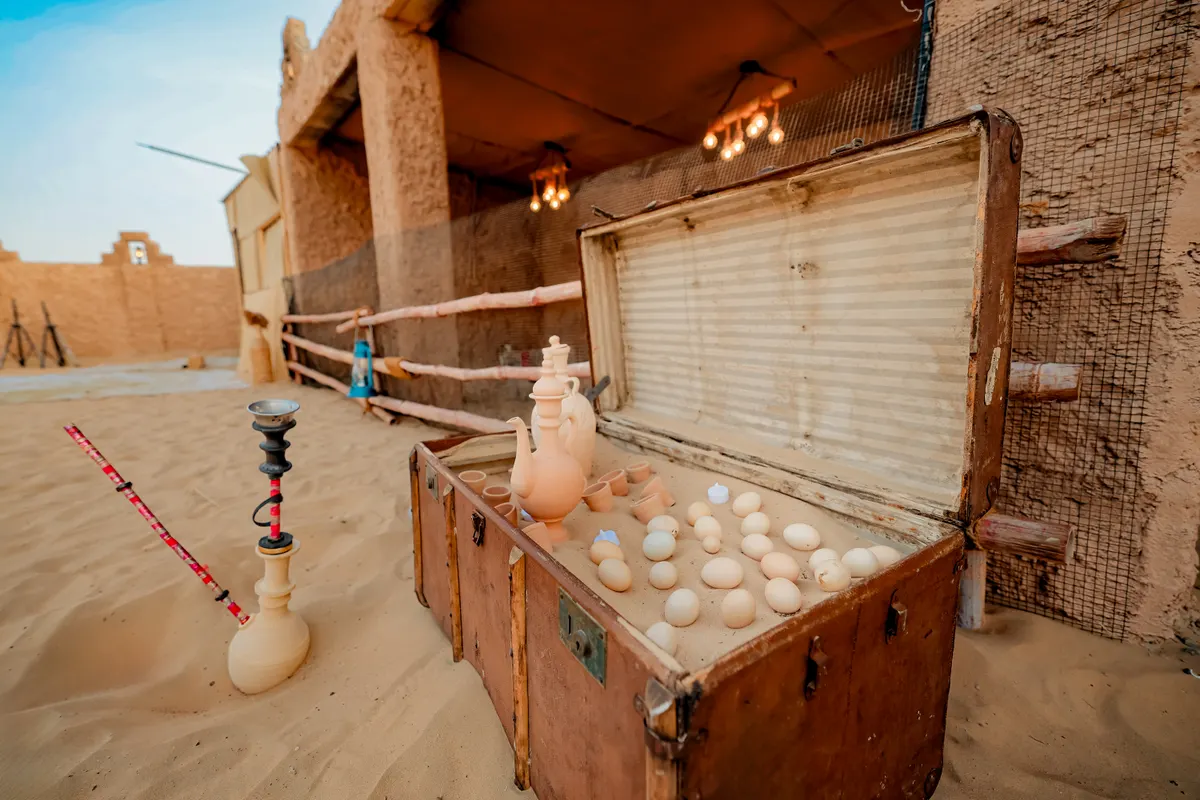
Search "staycation Abu Dhabi" and you will get a page of hotels with pools. They are good hotels. The trouble is that a night in a nice room twenty minutes from your own nice room is a room upgrade rather than a change of scene, and most people come home from one feeling like they spent money without going anywhere. The alternative sits about 45 minutes inland: the desert, which is close enough to reach after work and different enough that the trip actually registers as a trip.
Why the desert counts as a staycation and a hotel often does not
A staycation is meant to solve one problem, which is that you want the feeling of having travelled without the airport. Hotels solve the logistics half of that and rarely the feeling half, because the view out of the window is the same city you live in. Drive inland from Abu Dhabi towards Al Ain and the change is complete within half an hour. The buildings stop. The road noise stops. By the time you are on the sand at Al Khatim, there is nothing recognisable in any direction.
The second difference is what fills the evening. A hotel staycation is structured around amenities you use individually: the pool, the gym, the buffet. A desert night has almost nothing to do in that sense, which sounds like a downside and is the entire point. People talk to each other because there is no alternative, and the day ends at a fire instead of a television.
How far it actually is
Al Khatim sits between Abu Dhabi and Al Ain, roughly 45 minutes from the city depending on where in it you start. That is closer than most people assume, and it is why a desert night works as a Friday evening rather than a whole weekend. You are not committing to a drive that eats half the trip. If you are coming the other way, our comparison of Al Khatim and Liwa explains why the deep Empty Quarter dunes are a genuinely different proposition and need a longer trip to justify.
The season question, answered honestly
Between late October and early April, this is one of the best things you can do in the UAE. Evenings sit somewhere comfortable, nights get properly cool, and you will want a jacket by 10pm even though you spent the afternoon in a t-shirt.
Summer is a different conversation and we would rather say so than sell around it. Between June and September, daytime temperatures inland regularly pass 45C, and the overnight low often stays in the high thirties. That does not make a summer desert night impossible, but it does change what you should book and what you should expect. Anything without proper cooling that runs through the whole night, not just through dinner, will be uncomfortable. Arrival times shift later, the daytime activity programme mostly disappears, and the parts worth staying for are the hours after 9pm.
The shoulder months, May and October, swing a lot year to year. Our guide to the best time to visit a desert camp in Abu Dhabi goes through this month by month if you are trying to pick a date.
What to pack
- A jacket or fleece, even in March. The temperature drop after dark is the single most underestimated thing about the desert. A 30C afternoon can be a 15C night in winter.
- Closed shoes for the drive in and out, and nothing for the sand. Barefoot is better than sandals on dunes. Sandals fill up within three steps.
- A second pair of socks. Sand gets into the first pair regardless of what you do.
- Loose long sleeves rather than less fabric. They are cooler in the sun and they keep the evening chill off.
- A power bank. Signal drops and phones burn battery hunting for a tower.
- Lip balm and a proper moisturiser. The air is drier than the coast by a noticeable margin.
- Something to sit on the sand in that you do not mind washing.
What you do not need to bring is bedding, lighting or food if you are booking a serviced camp. If you are pitching your own tent, that changes entirely, and our guide to camping in the UAE covers the gear and permit side properly.
Who this suits
Couples do well here, particularly on an anniversary or a birthday where the aim is to mark something rather than to be entertained. Families with children over about five get more out of a desert night than almost any hotel: sandboarding occupies a seven-year-old for two hours, and the novelty of sleeping in a tent does the rest. Groups of friends who want to actually see each other, rather than sit in a restaurant with background music, are the third obvious fit.
It suits some people less well. If someone in the party genuinely cannot manage uneven ground, a sand site is hard work. If your idea of a break involves a spa treatment and room service at midnight, a hotel is honestly the better purchase. And if you are travelling with a baby, the temperature swing and the distance from a pharmacy are worth thinking about before you commit.
Shared night or exclusive use
There are two shapes of desert staycation and they are not close to each other. A shared camp sells you a spot on a site that other groups are also booked onto that night, which keeps the cost per person down and means the evening runs to a fixed programme. An exclusive-use camp means the site is yours alone, with no other bookings on it, and the evening is built around whatever you actually wanted.
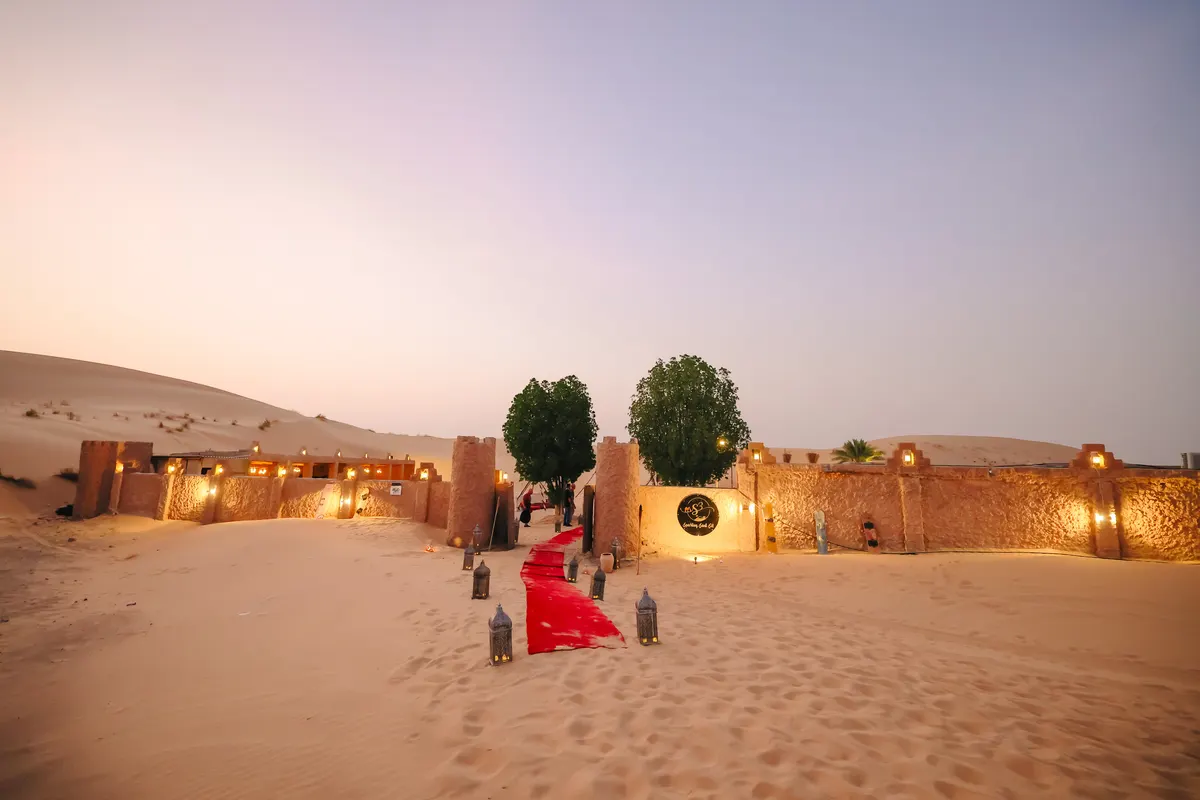
Our own camp at Al Khatim, Khayal Al Sahra, runs on the second model. It is a private site with 10 bedrooms and 20 beds, so a couple, a family or a group of sixteen can take the whole thing, and it is now bookable as a desert camp on Airbnb as well as directly. Rates vary by date and season, so there is no single nightly figure to quote; add your dates or ask us for a quote. Check-in is from 9:00 am, which is worth knowing because it means you can make a full day of it rather than arriving at dusk.
One evening, roughly
Arrive in the late afternoon while the light is still hard. Walk up the nearest high dune, because everyone does and it is worth it. Sunset, then Arabic coffee and dates at the majlis while the temperature starts falling. Supper cooked in front of you rather than held in a chafing dish. Then the part nobody plans for and everybody remembers, which is what happens when the lights go off and the sky turns on. Our desert stargazing guide explains how to time it around a new moon.
FAQs
How far is the desert from Abu Dhabi city?
Al Khatim is roughly 45 minutes inland, on the road towards Al Ain. Liwa, in the Empty Quarter, is about three hours and is a different sort of trip.
Is a desert staycation possible in summer?
Yes, but only with cooling that runs through the whole night rather than just through the evening programme. Ask that question specifically. Daytime activity is limited between June and September and the evening starts later.
Do I need a 4x4 to get to a desert camp?
Not to a serviced camp. Transfers are usually arranged from a meeting point on tarmac, and you leave your own car there. Independent camping is a different matter.
Is it suitable for children?
From about five upwards, very. Sandboarding, camels and a fire hold their attention better than most indoor attractions. Bring more layers for them than you think you need.
What does a desert staycation cost?
It depends on the date, the group size and whether the site is shared or exclusively yours. Exclusive-use camps are quoted per booking rather than per person, so a quote is the only honest answer.
Related guides
Tabassum founded Sparkling Sandset in 2012 and has run the Al Khatim camp through more than 500 private weddings, celebrations and cultural events since. She writes about the celebration and hospitality side of the business: weddings, birthdays, cultural programming and what it actually takes to host a private desert night well.