
How a Desert Event Setup Is Actually Built
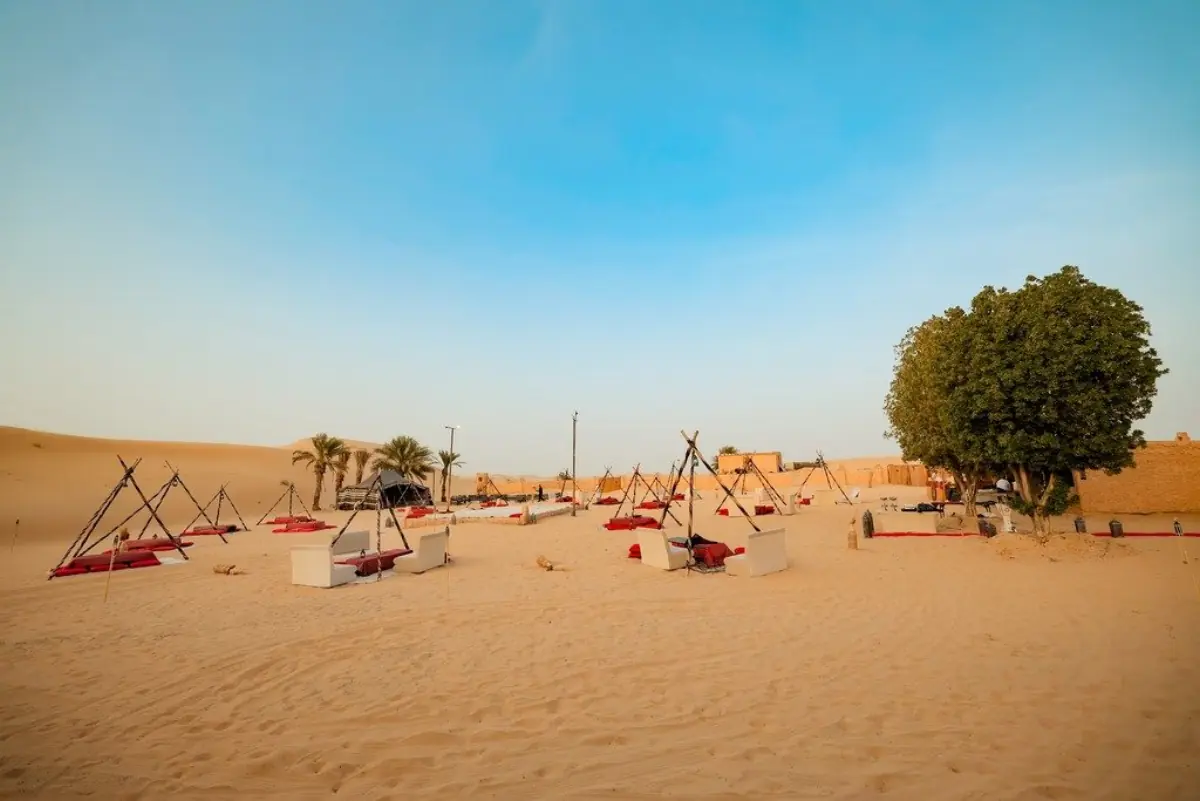
Guests arrive at a desert event around sunset, walk into a lit majlis with music playing and dinner service ready, and reasonably assume it has always been there. The useful thing to understand, if you are commissioning one, is that a desert site starts as sand with no power, no water, no shade and no road. Everything else is brought in.
Here is the sequence, because knowing it is what lets you judge whether a quote is realistic.
The survey comes first
Before anything is designed we walk the site with the event date and the guest count in hand. Three things get decided there: where the structures can stand, how vehicles will reach them, and where the sun will be at the hour that matters.
Ground firmness is the constraint people underestimate. Sand that carries a 4x4 in February may not carry a loaded truck after winter rain, and staging and rigging need compacted ground. This is why we check conditions two days before every build and hold an alternative site where the ground is marginal.
Structures and flooring
Bedouin tents, majlis canopies, dining marquees and back-of-house all go up first, because everything else hangs off them. Flooring goes down wherever guests will walk in formal shoes or where service trolleys need to move, which is a detail that separates a comfortable evening from one where everyone is wading.
Anything over about two metres needs its wind loading considered, and on leased land it also needs the landowner's written no-objection before it goes up.
Power
Every watt is generated. Lighting, AV, kitchen equipment, climate control and charging all run off generators sized with headroom and, for anything that must not fail, a second unit. Cable runs get buried or matted so nothing crosses a guest path at ankle height.
Generator placement is an acoustic decision as much as an electrical one. Put it upwind of the majlis and you have spent the evening listening to it.
Light
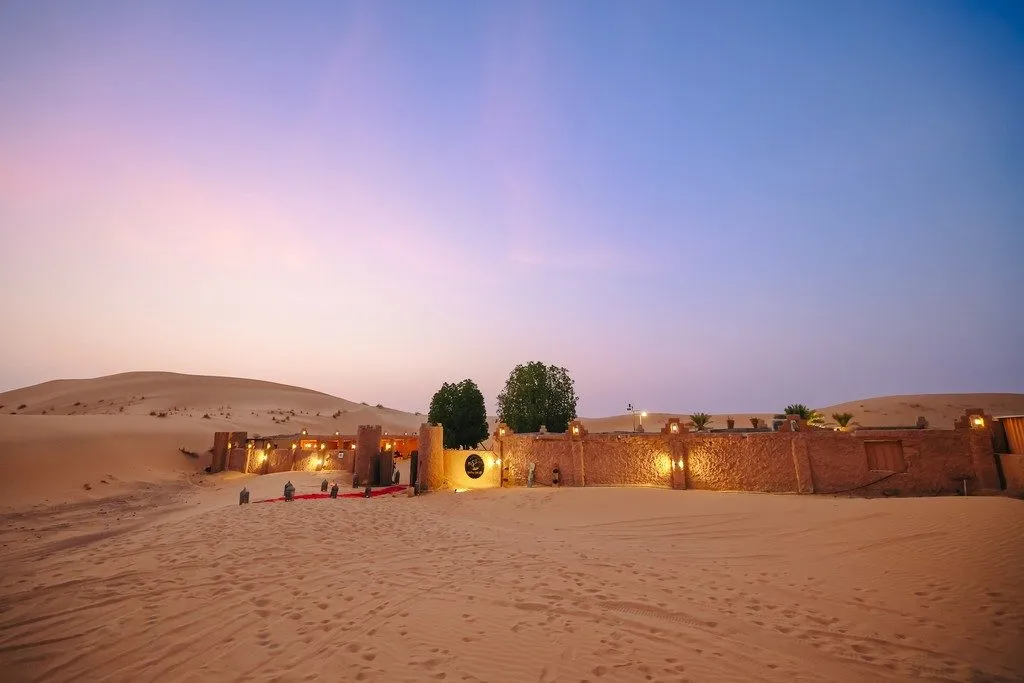
Desert darkness is genuinely dark, which is an opportunity rather than a problem. With no light pollution to fight, comparatively little equipment produces a strong result, and the design work is mostly about restraint: pools of warm light where people gather, the dune line grazed rather than flooded, and enough path lighting that nobody is picking their way to the washrooms by phone torch.
We programme lighting states rather than setting levels once, because the ambient light changes by the minute through the arrival window.
Washrooms, water and back of house
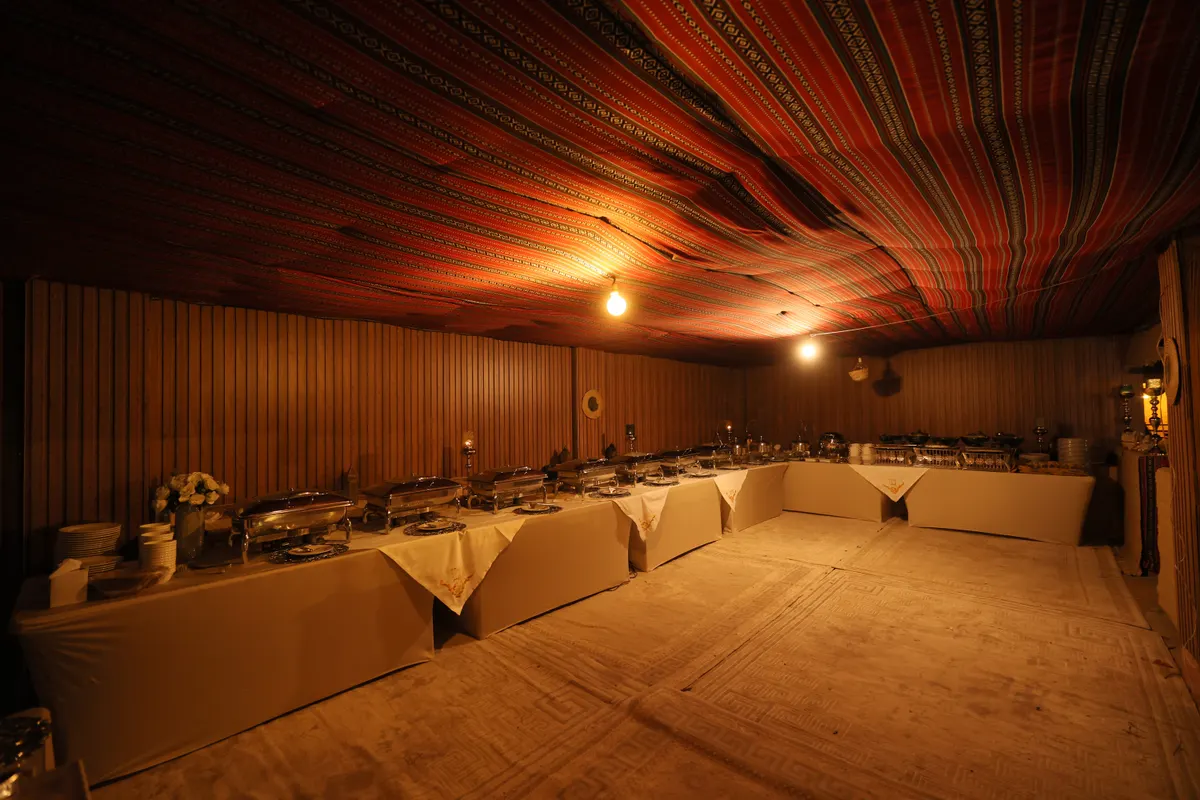
Serviced washroom units with running water, a field kitchen with correct holding temperatures, cold-chain handling for the drive out, waste separation and a crew rest area. None of it appears in a photograph and all of it determines whether the evening works.
Load-in windows
Build usually starts one to two days ahead, sometimes three for a large production. Where a site has access restrictions, those fix the schedule rather than our preference. Rehearsal, when the event needs one, happens at the hour the moment will actually occur, not at whatever time is convenient.
Strike
The part nobody asks about in the briefing and everybody notices afterwards. Everything comes out, waste included, and the site is left as it was found. Desert conservation zones are unforgiving about this, and rightly so. Strike is costed into the build rather than treated as an afterthought, which is one reason a credible quote separates build and strike from event-day service.
What this means for your quote
Most of the above is fixed cost. It barely changes between eighty guests and two hundred, which is why small desert events feel expensive per head and larger ones feel efficient. If a quote for a private desert build looks close to a per-head safari ticket, something in the list above is missing from it. It is the same reason our Abu Dhabi corporate venues comparison treats a desert build and a ballroom hire as different cost structures rather than competing line items.
FAQs
How long does a setup take?
One to two days for most events, three for a large production with staging and LED. Strike is typically a single day.
Is there electricity and wifi?
Generator power throughout with charging points. Mobile signal at Al Khatim is workable but not urban-fast; if you need reliable connectivity for a presentation, tell us at the briefing and we will plan for it.
What happens if it rains during the build?
Rain is uncommon and brief. The practical risk is ground softening, which affects vehicle access more than the structures. We check conditions two days out and can move site.
Can you build somewhere other than your own camp?
Yes. We run builds in Dubai, Al Ain, Liwa, Yas Island and Ras Al Khaimah on leased sites. The difference is that permits and landowner approvals enter the timeline, so those bookings need more notice.
Related guides

Tabassum founded Sparkling Sandset in 2012 and has run the Al Khatim camp through more than 500 private weddings, celebrations and cultural events since. She writes about the celebration and hospitality side of the business: weddings, birthdays, cultural programming and what it actually takes to host a private desert night well.