
Corporate Gala Dinner Ideas for Abu Dhabi: Theme and Programming
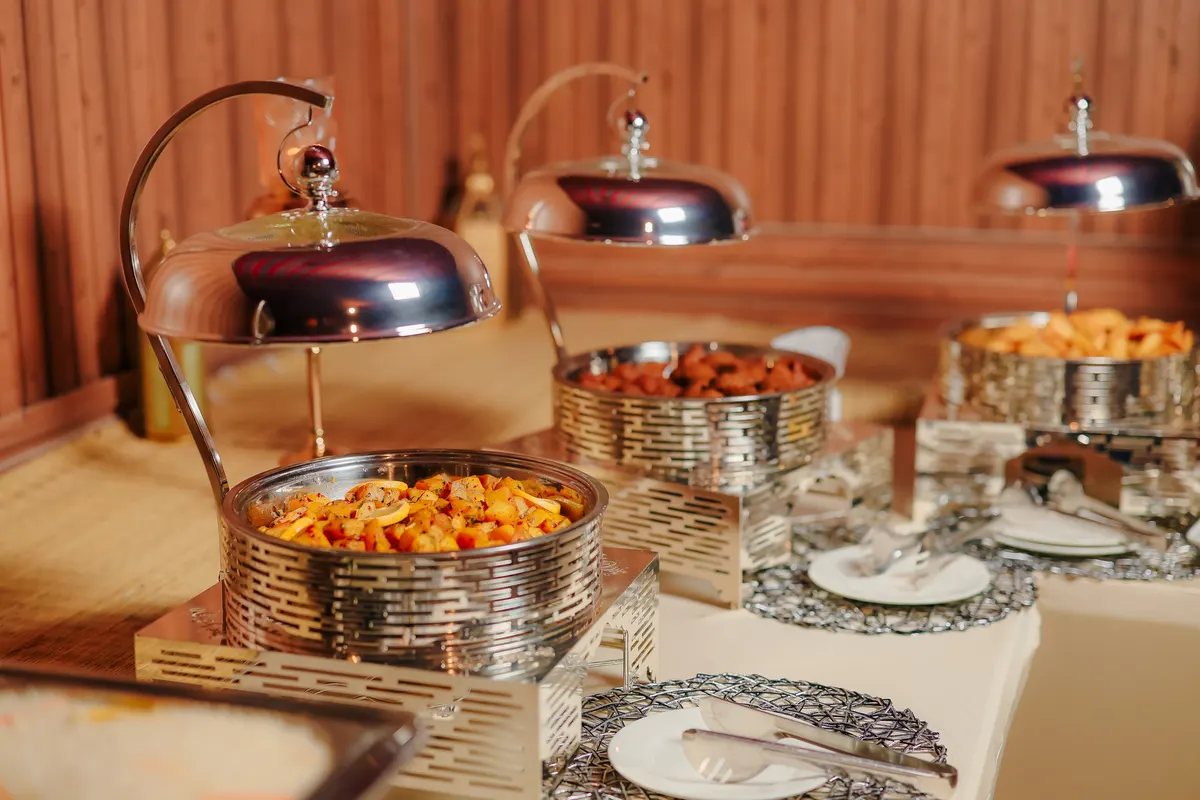
Venue is usually the first decision a gala planner makes and, once made, the least interesting one. Two companies can book the identical site and produce completely different evenings, because the venue only sets the container. What fills it, the theme, the staging, how dinner is actually served, is what guests remember, and it is where most of the planning conversation should go once the venue question is settled. If you are still weighing venue options, our guide to gala dinner venues in Dubai and Abu Dhabi covers that decision. This one starts from the assumption you have already made it.
Choosing a theme that earns its place
A theme should shape decisions, not just describe a colour palette. A weak theme is a name on the invitation and gold uplighting. A strong theme changes the arrival sequence, the menu, the entertainment booking and the staging, so that a guest could not mistake the evening for a different one.
- Heritage and hospitality. Majlis-style arrival, Arabic coffee service, cultural performance woven through the evening rather than bolted on as a single slot. Works particularly well for a company wanting to signal genuine connection to the region rather than a generic international gala.
- Celestial and desert night. Lighting and staging built around the sky itself, timed so the room dims into genuine darkness rather than competing with it. Strongest at a private outdoor site where there is no ambient light to fight.
- Modern minimal. Restrained staging, a strong single visual statement rather than many small ones, works well for a brand that wants sophistication over spectacle. Easier to execute well than it sounds, and a common choice for listed companies and financial services.
- Industry-specific narrative. A theme built around the company's own story, an anniversary, a product milestone, a founding story, rather than a generic template. The most memorable galas we see are usually this one, because nothing about the evening could be borrowed by a competitor.
Entertainment formats worth considering
Woven through, not scheduled as a block
The single biggest improvement most galas could make: stop treating entertainment as a twenty-minute slot between courses and start weaving it through the evening. A short cultural performance during arrival, a quieter musical interlude during the main course, a bigger moment for dessert and awards, reads as considered rather than a variety show bolted onto a dinner.
Cultural performance as hospitality, not floor show
An Ayyala or Yowla troupe, live oud or qanun, and falconry demonstrations during arrival all work exceptionally well for international guests when framed as genuine hospitality rather than staged entertainment. The framing matters more than the act itself; the same performance reads completely differently depending on whether it feels performed at guests or shared with them.
A live moment rather than a static one
Live cooking stations visible during the meal, a chef finishing a dish tableside, a performer arriving unannounced during dessert, all outperform anything pre-recorded or entirely scripted. Corporate audiences, more than most, respond to the sense that something is actually happening rather than being played back.
Staging concepts
Staging decisions worth making deliberately rather than defaulting on:
- Central versus end stage. A central stage with tables arranged around it puts every guest close to the action, at the cost of some sightline complexity. An end stage is simpler to light and film but puts back tables further from the moment.
- Height and scale matched to guest count. A stage sized for three hundred looks empty at eighty and swamps the room. Confirm final numbers before committing to a build.
- A single strong visual anchor. One large, well-executed element, a lit centrepiece, a projection surface, a dramatic entrance, does more than several smaller decorative touches competing for attention.
Dining formats and what each signals
| Format | Best for | What it signals |
|---|---|---|
| Synchronised plated service | Awards evenings with a fixed programme | Formality, control, a clear running order |
| Live-station and family-style | Networking-heavy evenings, informal galas | Warmth, generosity, encourages guests to move and mingle |
| Long communal tables, majlis-style | Heritage-themed or intimate galas | Connection over formality, works well under two hundred guests |
Plated service at scale is a crew question rather than a menu question. Synchronised plated service for a large group needs roughly double the service brigade of a live-station format, and it is worth confirming that staffing ratio at the quoting stage rather than discovering it on the night.
Building the run of show
The strongest galas we run have a single clear emotional arc across the evening: a warm arrival, a settled dinner, a rising moment through awards or a keynote, and a lighter close. Programme content in that order and resist the temptation to front-load the evening with everything exciting, because a gala that peaks during the welcome drinks has nowhere left to go.
FAQs
How do we pick a gala theme that does not feel generic?
Start from something specific to the company, an anniversary, a product story, a founding narrative, rather than a template theme. A theme tied to your own story is harder for a competitor to replicate and easier for guests to remember.
Should entertainment be one big act or spread through the evening?
Spread through the evening reads better than a single block. A short moment during arrival, something quieter during the meal, and a bigger close for awards or dessert keeps the evening moving rather than pausing for a scheduled show.
What dining format works best for a large awards gala?
Synchronised plated service, provided the service brigade is sized correctly for the guest count. It gives the formality and clean timing an awards programme needs.
Is a central stage or an end stage better?
A central stage puts more guests close to the action and suits an intimate, immersive gala. An end stage is simpler to light and film and suits a larger, more formal awards format.
Related guides

Younus leads corporate and MICE delivery at Sparkling Sandset, including team-building programmes, incentive groups and DMC partnerships across Abu Dhabi and the wider UAE. He writes about the operational side of corporate events: venue selection, group logistics, facilitation and what changes when the guest list is a client's, not a family's.