
Sparkling Sandset
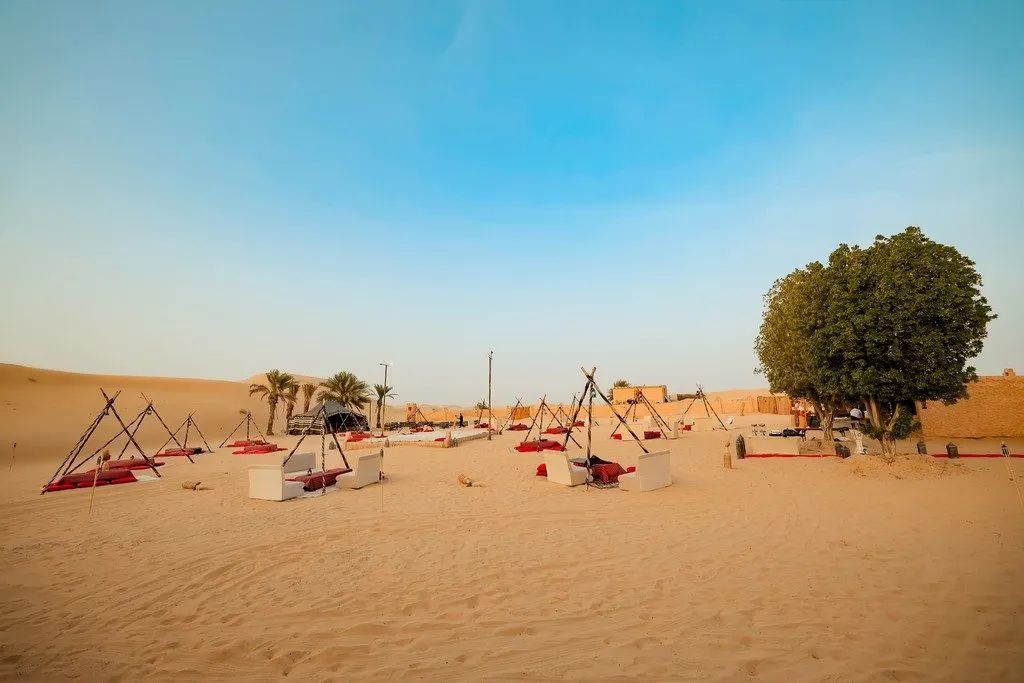
Desert Event Planner in Dubai — Sparkling Sandset desert camp, Abu Dhabi
Dubai · Desert specialists only

Desert Event Planner in Dubai

Sparkling Sandset is a desert event planner serving Dubai clients. We plan and build events on sand only: permits and site access, terrain and vehicle assessment, generator power, water and waste, temperature and wind planning, catering cold chain, and full strike. Our own camp sits 75 minutes south of Dubai in open Abu Dhabi desert.

Guests hosted
120,000+Guests hosted
Desert events delivered
1,400+Desert events delivered
Years on sand
13Years on sand
  • Automotive OEM
  • Global Pharma Group
  • Luxury Retail Group
  • International Bank

Licensed desert camp operator · insured crew · permitted site access

4.9/5 from 60 reviews

Desert event specification by format

Desert event specification by format
FormatGuest capacityTypical lead timePrice band (AED)
Dune-top proposal or shoot2 – 102 – 3 weeks6,000 – 20,000
Private desert dinner10 – 603 – 5 weeks18,000 – 60,000
Corporate desert night60 – 2506 – 10 weeks55,000 – 200,000
Desert gala with staging150 – 50010 – 14 weeks120,000 – 400,000
Desert wedding60 – 4005 – 10 months150,000 – 450,000+
Multi-day desert camp40 – 3008 – 16 weeks180,000 – 600,000

What generic agencies get wrong on sand

A ballroom is a solved problem. Power is in the wall, the floor is level, the temperature is fixed and the caterer has a kitchen thirty metres away. Take the same design into open desert and every one of those assumptions fails at once. The most common failures we are called in to fix are all variations of the same mistake: designing first and engineering afterwards.

Staging sinks. Sand is not a foundation; it compacts unevenly and shifts under load, so any platform, truss or LED wall needs proper spreader plates and a levelled base. Uplighters buried in soft sand fall over by 21:00. Round tables on unprepared ground wobble through dinner. A dance floor without a decked sub-base becomes unusable after fifty people have stood on it.

Cabling is underestimated. A site with no mains supply typically needs 150 to 250 metres of cable run, buried or matted for trip safety, plus a second generator so a single fault does not take the evening down. Agencies that quote one generator are quoting a single point of failure.

And catering gets cut too fine. Food travelling an hour into the desert needs a validated cold chain, a shaded holding area and a service plan that assumes wind. Buffets in open air without wind protection are how you end up with sand in the mezze at the exact moment your client walks past.

Permits, land and access near Dubai

Desert land around Dubai is not open ground. It is a patchwork of conservation reserve, municipal land, private holdings and camel farming areas, and each requires a different permission. Conservation reserves protect habitat and impose real restrictions on vehicle movement, structures, generators, lighting and sound. Municipal desert land requires event permissions and often police notification for convoys. Private sites need a contract with the holder plus your own compliance file.

The paperwork itself is not exotic: site plan, structure and rigging certificates, civil defence fire access, third-party liability insurance, crowd and vehicle management, waste removal undertaking, and labour documentation for crew. What catches people out is sequencing, because several approvals depend on a signed site agreement that may itself take two weeks to obtain.

Our own camp at Al Khatim removes most of this. The site is held and licensed, access is controlled, infrastructure is permanent and the approvals already exist. That is why a client with a six-week timeline is usually routed there rather than to a new site near Dubai.

Power, water and waste in the field

A 200-guest desert dinner with staging, LED, kitchen and lighting typically draws 60 to 100 kVA. We run silent generators sited downwind and out of sightline, with an N+1 spare, plus a small UPS on the AV and payment systems. Fuel is calculated for the full build and strike, not just show hours.

Water is trucked in: potable supply for the kitchen and bars, service water for washrooms, and a separate greywater tank because nothing is discharged to sand. Washroom units arrive on flatbeds and need firm ground and a serviceable route in and out, which is why the vehicle plan is drawn before the guest layout.

Waste leaves with us. Every event ends with a sweep of the site, including cable ties, gaffer, cigarette ends and decorative material. The desert shows everything that is left behind, and a site that is not returned clean is a site you will not be allowed back to.

  • 60 – 100 kVA typical draw for a 200-guest dinner with staging and kitchen
  • N+1 generator redundancy on every event above 60 guests
  • Potable, service and greywater handled separately, nothing discharged to sand
  • Full site sweep and waste removal at strike, photographed for the client report

Weather windows and when not to book

The desert season around Dubai runs October to April. December to February evenings sit between 15 and 22 degrees, which is comfortable for seated dining but cold enough after midnight that outdoor lounges need heaters and blankets. October and April are warmer, with sunset arrivals still pleasant and pricing softer.

The variable that matters more than temperature is wind. Shamal winds sweep in from the north-west, typically in winter and early spring, and can carry enough sand to make an open-air dinner unworkable. We monitor forecasts from ten days out and hold a decision point 72 hours before the event, with a defined fallback: covered marquee capacity, a repositioned layout in the lee of a dune, or an agreed reschedule.

May to September is possible but honest planning means later start times, misting and cooling, shaded build periods for crew, and shorter guest exposure. We will quote it. We will also tell you if the format you want is not going to work in August.

How we deliver

01
Week 1

Terrain and access survey

Physical site visit: dune stability, vehicle route, wind exposure, sightlines, generator and kitchen positions, and emergency access.

02
Within 48 hours of survey

Engineering-led proposal

Design costed alongside the infrastructure it needs, with power load, water volume, crew count and contingency stated openly.

03
4 – 12 weeks out

Permits and rehearsal

Approvals filed, structures certified, risk assessment issued, and a technical rehearsal on site for anything time-critical.

04
Event week

Build, show, strike and sweep

Two-day build, weather decision point at 72 hours, full crew on site through the event, overnight strike and photographed site sweep.

Gallery

4.9/5 from 60 reviews

It gave me a true desert experience without feeling commercial or crowded. The camp is set up beautifully and the staff made sure everyone felt taken care of.
Sahala
Guest

Frequently asked questions

How do I find a desert event planner in Dubai?+

Look for an operator that plans on sand routinely rather than one that occasionally takes a ballroom concept outdoors. Ask who holds the site permission, how many generators they specify, how they handle greywater, and what their weather decision point is. Sparkling Sandset plans desert events only and operates its own licensed camp 75 minutes south of Dubai.

What permits are needed for a desert event near Dubai?+

Site permission from the landholder or reserve authority, an event permit from the relevant municipality, civil defence fire access approval, structural certificates for staging and tents, third-party liability insurance, police notification for convoys, and a waste removal undertaking. Reserve sites add habitat, lighting and sound conditions.

How much power does a desert event need?+

A 200-guest dinner with staging, LED, kitchen and lighting typically draws 60 to 100 kVA. We specify silent generators with N+1 redundancy, fuel calculated across build and strike, and a UPS protecting AV and payment systems.

What happens if there is a sandstorm?+

We monitor forecasts from ten days out and set a formal decision point 72 hours before the event. The contingency is agreed in advance: covered marquee capacity, a repositioned layout sheltered by a dune, or a reschedule under pre-agreed terms.

When is the desert season around Dubai?+

October to April. December to February gives the most comfortable evenings, cold enough after midnight to need heaters. October and April are warmer with softer pricing. Summer events need later starts, cooling and shorter guest exposure.

How far is your desert site from Dubai?+

Approximately 75 to 90 minutes by coach from Downtown Dubai. We manage transfers, marshalling, spotters and a recovery vehicle on site for any 4x4 movement.

Can you build a stage and dance floor on sand?+

Yes, with proper engineering: levelled base, spreader plates, decked sub-base and load calculations. Anyone placing staging directly on unprepared sand is creating a safety problem rather than a design one.

How is catering kept safe in the desert?+

Food travels under maintained cold chain from a licensed kitchen, holds in a shaded controlled area on site, and is served from wind-protected stations. Temperatures are logged. Open-air buffets without wind protection are avoided.

Do you clear the site afterwards?+

Completely. Every event ends with an overnight strike and a photographed sweep covering waste, cable ties, gaffer, decorative material and debris. Nothing is left on the sand.

What size of desert event can you deliver?+

From a two-person dune-top proposal to festival formats above 900 guests with multiple stages, temporary kitchens and full crowd management.

Planning something on sand?

Send the date, guest count and the look you have in mind. We will tell you what it needs technically, what it costs, and whether the season suits it.

CallWhatsApp