
A Dark Sky Guide to Stargazing Near Abu Dhabi
Most advice about desert stargazing near Abu Dhabi describes what it feels like to see the Milky Way for the first time. This is not that. This is the planning layer underneath it, the calendar, the map and the kit list, so the night you actually book is a good one rather than a lucky one.
Build the trip around the moon, not the calendar
The single biggest lever is moon phase, and it is bigger than location or season. A bright moon, especially within a few days of full, lights the sky enough that only the brightest stars survive it. A new moon or the days either side of it is when the sky goes properly dark and faint detail, the Milky Way included, becomes visible.
The practical version: before you pick a date, check the moon phase, not just the weather. A clear night around full moon is a pleasant desert evening. A clear night within roughly five days of new moon is an actual dark sky. Most people who say a desert stargazing trip "wasn't that special" simply went on the wrong week.
Best time of year
October to April gives you the clearest, driest air in the UAE, which matters as much as darkness does, a hazy or humid sky washes out faint stars even without a moon in the way. Summer's higher humidity and dust noticeably reduce what is visible even on a technically clear night.
Within that window, midwinter nights are coldest but often the steadiest air, and Orion, one of the easiest constellations for a beginner to find, sits high and bright. If you are choosing between two clear new-moon nights and nothing else separates them, take the colder one.
A qualitative map of the region
Nowhere in the UAE is far enough from a city to be untouched by light entirely, but the difference between "workable" and "genuinely dark" is large and worth understanding before you drive anywhere.
- Abu Dhabi and Dubai themselves. Not viable. The sky glow from either city erases everything but the moon, planets and a handful of the brightest stars.
- The belt within about an hour of either city (Al Qudra, the edges of the Dubai desert). Noticeably better once you are away from the glow directly overhead, but still washed on the horizon facing the city, especially Dubai's, which is bright enough to affect the sky from some distance away.
- Al Khatim and the wider Barma North dune belt, roughly fifty minutes from central Abu Dhabi. Dark enough on a clear moonless night for the Milky Way to be visible to the naked eye, with the horizon toward the city carrying a faint glow and the rest of the sky properly dark.
- Liwa, at the edge of the Empty Quarter. The darkest accessible skies in the country, with no settlement of real size nearby in any direction. The trade-off is distance, it is a two and a half to three hour drive from Abu Dhabi each way.
For most people, Al Khatim is the right balance: dark enough to be genuinely worth the trip, close enough to do on a normal evening. For a dedicated astrophotography trip or a special occasion, Liwa is worth the extra driving.
Equipment that actually helps
You do not need much, and the wrong purchase is a cheap department-store telescope, which frustrates far more beginners than it helps.
- Your eyes, given time. Full dark adaptation takes twenty to thirty minutes of no bright light at all. One glance at a phone screen resets the clock, so treat your phone as the enemy of the whole exercise.
- A red light or red-filtered torch. Red light preserves night vision in a way white light does not. Cheap and worth carrying.
- Binoculars before a telescope. A basic pair of 10x50s shows craters on the moon, Jupiter's moons as points of light and far more of the Milky Way's texture than the naked eye, with none of a telescope's setup time or learning curve.
- A star chart app, screen brightness turned right down. Most phones have a night-mode display setting for exactly this. Use it.
- A reclining chair or a rug. Standing and craning your neck upward for twenty minutes is the main reason people give up early. Lying back and taking the sky in changes the whole experience.
- Layers. Standing still at night in the desert, even in a season that felt warm at sunset, gets cold quickly once you stop moving. This catches out more visitors than the darkness does.
What is actually visible
On a clear, dark, moonless night away from the cities: the Milky Way as a real band across the sky rather than a faint smudge, Orion and Sirius dominating the winter view, Jupiter and Saturn when they are above the horizon, and a steady trickle of satellites once your eyes have adjusted enough to notice them. None of it requires a telescope. Most of it requires timing. For a more experiential account of an actual night under the stars, including the meteor showers worth staying up for, see our companion piece on stargazing in the UAE desert.
FAQs
What is the single best thing to check before booking a stargazing night?
Moon phase first, then weather. A clear night at full moon is a much weaker sky than a clear night near new moon, and the difference is bigger than most people expect.
Do I need a telescope to see the Milky Way?
No. The naked eye, given twenty to thirty minutes of dark adaptation and a genuinely dark, moonless sky, is enough. Binoculars are a better first upgrade than a telescope.
Is Al Khatim dark enough, or do I need to go all the way to Liwa?
Al Khatim is dark enough for the Milky Way to be clearly visible on a clear, moonless night, and it is roughly fifty minutes from Abu Dhabi. Liwa is darker still but three hours away, worth it for a dedicated trip rather than a casual evening.
What should I wear?
More than the evening temperature suggests. Standing still after dark, even outside the coldest months, cools you faster than walking around does. A jacket and closed shoes are worth bringing even when the forecast looks mild.
Related guides
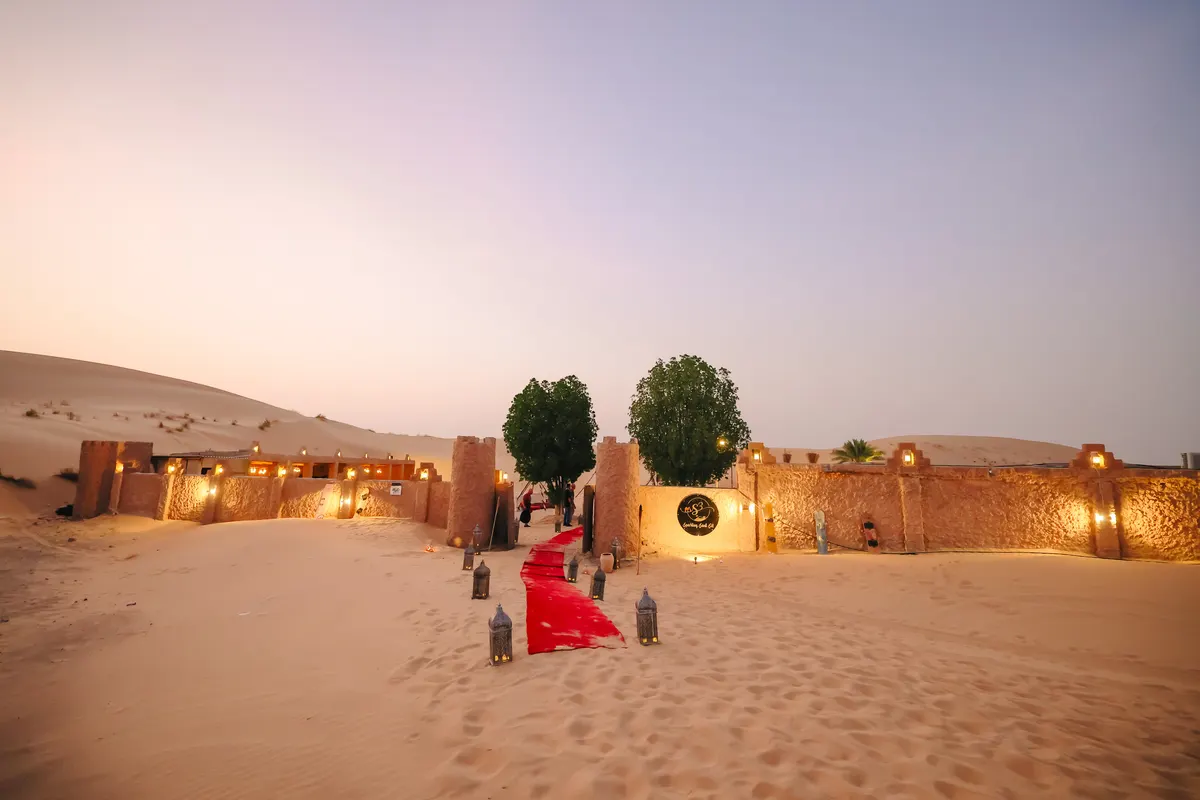
Tabassum founded Sparkling Sandset in 2012 and has run the Al Khatim camp through more than 500 private weddings, celebrations and cultural events since. She writes about the celebration and hospitality side of the business: weddings, birthdays, cultural programming and what it actually takes to host a private desert night well.